|
Gentlemen Prefer Trains
By
S.Parthasarathy
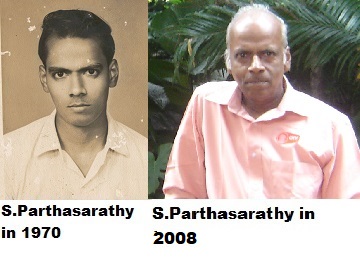

'Gentlemen prefer trains' was the slogan of a private railway in Britain after the introduction of First class. This gentleman (yours truly) preferred railways in 1970. My tryst with Indian Railways began on 6th July 1970. This article is about the thirty-eight years since that memorable day to 2008 when I retired. I have adopted the Question-Answer format to describe my experiences. My objective is to describe my career events in a way that would sustain your interest.
Do you remember your first day in Mussoorie?
Lost Rs. 13/- - Very vividly. It was 3.00 P.M. on 5th July, 1970 when I reported in Mussoorie. I left my relative’s home in Delhi quite early, but could reach the Academy only at 3.00 PM. There were a few more with me and when we were told that our date of joining service would be 6th July, there was disappointment all around. There were some anxious men who started wondering whether the UPSC rank would change. But almost immediately, the clarification came that the only consequence was that we would not get salary for that day. It was a princely sum of Rs. 13/- that I lost.
Mussoorie days?
Too many Laxminarayanans, First Class - Surprisingly I have only a few memories of my Mussoorie days. May be because nothing happened in the intervening period to reinforce my memories. I also lost the album that I had made of all the photographs in Mussoorie. I do remember Stapleton which was my hostel and Pawan Raina who was my roommate. Narayanan and I became close since we were both from the same college and both of us had a dislike for rajma. On the days when rajma was on the menu, we would go to Hari’s Canteen and have a 5-star bar and a bottle of Coca cola which was very filling. (After Mussoorie, I drank Coca cola just once in my life in 1977 before George Fernandes banned Coca cola in India). I remember a big group of us visiting Kemptee falls. I remember the Chess tournament since I defeated a Delhi college champion in the first round. I do not remember the name but I remember Pawan was more elated than me at my victory or rather the Delhi lad’s loss. In the next round I lost to Prasad (Income Tax, I think) who was the eventual champion. Once we had gone out and came back after 9.00 P.M. We were asked by the sentry at the gate to sign a register. When we opened the register, we found all the ten before us had signed as 'Laxminarayanan,’ We also wrote 'Laxminarayanan' and signed. It is to the credit of the Director that he abolished the formality later. When we reported to Mussoorie we had not been allotted the services to which we were to be posted. A few days before the end of training, seven of us came to know that we were joining Indian Railway Accounts Service (IRAS). We were the centre of attraction in the Academy when a supervisor from Oakgrove School, a public school run by railways came to give us our passes for travel. Though the pass was from Dehra Dun to Chennai, I used it from New Delhi to Chennai in October 1970 to travel in First Class for the first time in my life.
Your career in a few paragraphs?
1970-72 – Paid for doing nothing - The period from December 1970 to May 1972 was perhaps the most relaxed and enjoyable period of my life. One of my seniors advised me that a probationer was not expected to have any training before 11 A.M. and after 1 P.M. We (and our senior officers) made sure that our training was only for two hours and other time was spent in meeting people, going to films, inviting ourselves for lunch with senior officers ( 'May we have the pleasure of your company for lunch - in your chamber?') etc. I travelled extensively around Southern Railway as well as a large part of India. To make sure that we did not feel that we were paid for loafing around, we were periodically sent to Railway Staff College, Baroda for class-room training, exams etc. Ashok Chawla, Sneh Bijlani (nee Prasad), Maya Sinha (nee Gupta) and I were a happy bunch. Ashok got married and his wife Deepa joined the group as another (unpaid) probationer for nearly an year. I remember that the daily allowance was Rs.12.50, almost same as one day’s salary I mentioned earlier. This meant that I could comfortably live on the daily allowance and give a large part of my salary to my father.
1972-79 – Farewell to cherish, Life without energy My first posting was to Solapur. I got married to Amritha during this period. The total strike by all the staff of Solapur demanding merger with Central Railway took place during this period. Only the essential services were operated by the Territorial Army, but the division was crippled. However the staff were very good and never barred the officers' way to the office. I was going by scooter to the office and it was a touching sight to see everyone getting up and giving way to my scooter. One of the most memorable moments in my career was the farewell to me in Solapur. The entire Accounts staff had gathered in the canteen for dinner and my wife and I had the farewell with the vedic mantras being chanted. I realized that if you are fair, impartial and straightforward, the staff are with you
A short stint in Vijayawada, then on to Secunderabad. I am nostalgic about this city since Harish (our son) was born in 1975 when I was there. Somehow the Railway Board came to know that I was happy in Secunderabad and I was promptly transferred to Chittaranjan. I can claim to be a victim of emergency, as the transfer took place during the emergency. Despite my eternal optimism, the shift made me unhappy initially. Life was difficult in Chittaranjan with many power cuts (I used to tell people that Bengal has Chatterjee, Mukherjee and Banerjee, but sadly no energy), lack of communication facilities and so on. But my wife, I and our 3-month old son were happy. I was in the EDP Centre and we had a 2nd generation computer. Today when we talk of a minimum of 4 MB of memory in a cell phone, I was working with IBM 1440, which had a memory of 8 KB. We were carrying out all the applications of today, viz. Payroll, Provident Fund, Materials Management, Production Management etc. We used Autocoder, a programming language which was just a step ahead of the machine language. In order to use the memory wisely, we used overlay technique extensively and enjoyed programming, which needed a lot of skill. I also learnt the virtues of proper documentation in any software. In 1977, IBM was sent away from India and we had to deal with an ancient computer system and a nascent maintainer in CMC. Yes, EDP centre in Chittaranjan was a challenging place of work.
1979-87 – Jai Kisan, Acharya Devo Bhava After a brief spell in Bombay, I went to Kota. We had a big bungalow in Kota, where we grew two crops of wheat and one crop of rice (about 150 kgs. each) in the two years that we were there. The work was also interesting as the basic purpose for which the Railways exist, viz. transportation, is achieved only in a division. In 1981, I moved to Railway Staff College, Vadodara as Professor. The six years I spent there was a period of self-development. I was reading over twenty non-fiction books every month. I covered a wide range of subjects - communication skills covering public speaking and rapid reading, memory skills, group and inter personal skills, history of Indian Railways, railway accounts etc. I was also responsible for the entire two-year training of IRAS probationers. All these kept me extremely busy and they also kept me from becoming stale, which is the biggest problem in teaching. Personally also it was a happy period. My daughter, Aarthi, was born there in 1984. I went on my first trip abroad to U.K. in 1983. (Delhi to London was my first flight in life.) While in Vadodara, I shook hands with a future prime minister – Dr. Manmohan Singh.
1987-95 Partha ban gayaa Gentleman भाईयों और बहनो I truly ceased to be a railwayman and became a gentleman by going on deputation to Bhabha Atomic Research Centre in 1987 as Internal Financial Adviser. I spent a pleasant three years there with scientists of the caliber of Dr. P.K. Iyengar, Dr. R.Chidambaram and many more. The colony at Anushakti Nagar, where I lived is an excellent township. BARC and Anushakti Nagar are perhaps the greenest places in the whole of Mumbai. From BARC, I went to U.K. in 1989 for a training course on Public Enterprise Management. After a short spell on Central Railway, I went on my second deputation to Khadi and Village Industries Commission (KVIC ) as Member, Finance. It is an organisation with a rich history and many excellent individuals. But it lacked proper systems. A via media between the rigidity of systems (like Railways) and an elastic ad-hocism (like KVIC) is what any organisation needs to become an excellent one. My stint there was very interesting and I found the work highly enjoyable. I travelled extensively all over India. I went to U.K. again for a two-week seminar on Rural Banking. During my stint in KVIC, I met many eminent persons which include S.P.Balasubramanyam, Ajit Wadekar and two Prime Ministers - Mr. Narasimha Rao and Mr. Chandrasekhar. I was instrumental in computerisation with the help of NIC and left KVIC with a lot of goodwill. And a personal achievement. Since I was visiting villages in Bihar and Rajasthan often, I was able to deliver speeches in Hindi. Between 1990 and 1998, I must have delivered about 20 speeches in Hindi, no small achievement for one who had shouted anti-Hindi slogans in 1965. Though involved in many projects, I particularly recall a project in Saharsa district of Bihar where Santosh Mathew, a young IAS officer was DDC. I was impressed by his enthusiasm and got his proposal for a khadi spinning and weaving project approved by the Commission. I visited Saharsa a few times and the enthusiasm among the village-women was heart-warming. But the project developed problems in marketing the final product. And it became an orphan with Mathew getting shifted and my going back to the Railways. Two more years for both of us could have seen a stabilized project ensuring earnings of at least Rs, 25/ per day to over 3000 women in the district on a regular basis. And I can never forget Mr. Nawal Kishore Sharma, who was the Chairman of KVIC when I left it. He was a courteous and compassionate person, the antithesis of a bureaucrat's image of a politician. By 1992, Bombay was in me as much as I was in Bombay making me opt for a Fiat car (I was sorry that I could not get it painted yellow and black) as a replacement to the Ambassador preferred by all bureaucrats.
1996-98 - Going far in life , Japanese blood in my veins? After a brief spell on Western Railway, I went to the easternmost division of Indian Railways as DRM (Divisional Railway Manager). I opted for the posting as I could retain my Mumbai house and return to Mumbai after two years. But I used to tell people when they asked me why I went to Tinsukia,’ When I joined service, an astrologer told me I’d go very far in service. I didn’t realise what he meant.’ Jokes apart, it was a memorable experience. I had mentioned that the basic purpose for which the Railways exist is transportation which is achieved only in a division. Instead of being head of one department, I was coordinating the work of all the depertments. Though Assam was a difficult state with rampant terrorism, Tinsukia was relatively better. Of course, there was tension at times like the arson at one of my stations in which the station master on duty was killed ; the threats on Independence and Republic Days and an extortion threat to me on telephone. But overall I have the satisfaction of having performed well on my job. The highlights in Tinsukia during my stint were the conversion of the entire division from Metre Gauge to Broad Gauge, bidding farewell to Steam Locos with the last run (Click here to read my article published by The Eastern Clarion, Jorhat on this occasion), setting up a Divisional Training Centre for the staff, a new Officers' Club etc. And I shook hands with two prime ministers – Mr. Deve Gowda and Mr. I.K.Gujral. I shall always cherish the team-spirit among all officers and staff of Tinsukia. My visits to Kaziranga in Assam and Namdapha in Arunachal Pradesh are unforgettable. Namdapha is easily the most beautiful place in India I have visited. I can claim to be among the earliest in Assam to use the Net. In August 1997, I sent an e-mail from Tinsukia to my nephew in Chicago by connecting to ERNET via Central Railway, Mumbai. How can I forget my mild heart attack in May 1996, when I was on leave in Chennai? I was diagnosed as having Coronary Embolism According to my doctor in Railway Hospital, Perambur, this was more common among Japanese coronary patients than anybody else. Though nothing serious happened, it helped me become more aware of my health. I started walking a lot and reduced my food intake, habits which continue even now. People give up eating certain fruits and vegetables after a visit to Varanasi or Gaya, but I gave up quite a lot after a visit to Perambur.
1998-2002 - Amchi Mumbai Though I had spent nine years in Mumbai earlier, these four years were very special. I consider my posting as FA & CAO (Finance & Budget) on Central Railway as the best within Railway accounts. We had an extremely good team on Central Railway. The life outside the office was equally interesting. We lived in Badhwar Park, Colaba. The flat was on the 12th floor with a view of the sea from all the three balconies. My wife and I became members of the National Centre for Performing Arts (NCPA) and attended plays / concerts almost every week. My wife could accompany me on my fourth foreign trip in 1999 to Germany and Switzerland officially and a few days in Paris en route. The taste of the vegetarian lasagna and coffee we had on top of Mount Titlis will be with us forever. By 2002 I had become a confirmed Mumbaikar in love with the city. But my mother became bed-ridden and my father-in-law had a stroke, both in Chennai. So I requested for a shift to Chennai which came through. I have often wondered why Mumbai is liked by people. Here are a few of my own reasons - 'Two afternoon papers with Jumbo cryptic crosswords on Saturdays as a bonus: No power failures at any time of day or night: No three-wheelers in south Mumbai: MTNL net connection (in 2002) was quite fast: The corporation water was very drinkable and we never bought water: Not one in the office was bothered about caste (unlike Chennai): Mosquitoes were not many, especially on the 12th floor where we lived: No cattle or pigs on the roads: Taxi and autowallahs would ask you 'where’ after you got into the vehicle and the meter was turned on: First Class of suburban trains had cushioned seats (unlike Chennai), National Centre for Performing Arts (NCPA) is the best of its kind: Nobody flaunted his wealth (like in Delhi. I lived near Amitabh Bachhan’s house in Juhu for five years and near Ambani’s residence in Colaba for seven years.But there was not a single occasion when life was disrupted because of them): People using quaint expressions – when asked about his brother’s health, my peon replied ,’woh off ho gaya (He died)’: The black & yellow Fiat taxis held an indescribable attachment: Even in the 80s, Bombay had some very good cinema halls, Amritha and I have seen films in about 40 theatres between 1987 and 2002: And where else could you see Dilwale Dulhaniya Leh Jayenge in a cinema-theater whenever you wanted?’
2002-2008 - Back to roots as an old HAG
மெடராஸ் நல்ல மெடராஸ் Madras, nalla Madras (Chennai is good) - We have an active IRAS site with a message board where transfer orders of all officers get posted regularly. A lot of my colleagues were surprised when they read about my transfer to Integral Coach Factory, Chennai. Friends started ringing me up wanting to know why a confirmed Mumbaikar was going from a post in which the budget handled was Rs. 7000 cr. and the staff strength was over 3000 to a post, which had less than 10% of the budget and staff. To a select few, I mentioned my mother’s and father-in-law’s health. But to many, I just said 'आर्डर आया है तो जाना ही पडेगा - I have to carry out the orders).’ Rumours floated that vigilance department had instituted an enquiry and wanted me to be moved out of Mumbai.
When your energies sag, you get Senior Administrative Grade and you become a Higher Administrative Grade officer when you become an old hag. I came to Chennai in 2002 and got my Higher Administrative Grade. After more than 20 years, we were living in a big bungalow. Even as we were comfortably settled in Chennai, doubts whether I did the right thing continued. I continued to compare Mumbai and Chennai to the disadvantage of Chennai.
My mother started staying with us. She was a patient of Rheumatoid Arthritis, a debilitating disease that atrophies the bones. She was confined to the bed for the previous two years, though her faculties and the body systems functioned normally. However she needed full-time attention. After a lot of searching, we got an ayah (Kantimathi) who stayed on. She was very affectionate and friendly to my mother.
One evening, when Amritha and I were reading magazines in the living room, Kantimathi asked my mother,’ Your voice is good. Why don’t you sing?’ My mother first demurred and then said.’ I’ll sing if you will dance.’
Amritha and I could hear all this and we quietly stood behind the curtain separating the two rooms to watch the scene. My mother started singing a Nalangu song (a type of song sung in marriages) and Kantimathi, unaware that we were watching, started dancing. The sight of the happy couple brought tears in the eyes of Amritha and me. That was the moment that made me realise that I had done the right thing in moving to Chennai. All the negative things about Chennai stopped bothering me from that moment. Though my father-in-law passed away immediately after my arrival in Chennai, my mother-in-law would spend a lot of time with us. The sight of my mother and mother-in-law talking about the old days reinforced my feelings. And I started liking Chennai and decided to settle down in Chennai.
The one year in ICF and two and half years in Southern Railway have changed my life completely. I started visiting a lot of temples and Carnatic music concerts and wrote two books on Carnatic music. Professionally both postings gave me opportunities to try some man-management techniques successfully. I also went on my last official foreign trip to Germany in 2004. The last lap of my 38-year (or 41 if I include my Chemplast stint) journey was for two years as a judge in Claims Tribunal. This period was memorable as Harish (my son) got married to Archana. I never bothered much about promotions earlier, but the promotion they gave me in 2007 (grandfather) was something I looked forward to. Shubha, my grand-daughter has been a source of joy to me. The posting in the Tribunal was an interesting and different experience and gave me ample time to pursue my other interests. In a sense. life had come full circle as my first two years (1970-72) and the last two years (2006-08) were the same – two hours of work and balance time for social and other activities.
Your last day at work?
Farewell, Farewell - I had two last days at work. The first was on 8th December 2005 when I voluntarily retired from the Railways to join the Railway Claims Tribunal. There were a series of farewell parties earlier in Madurai, Tiruchi, Palghat, Tiruvananthapuram and Chennai divisions as well as a couple of farewells by the accounts fraternity. All these meant that on my last day in Indian Railways, I had to deliver only one farewell speech to General Manager and the Principal Heads of Department. I dissuaded my officers from dropping me in my house which is the norm. This was since my wife and I were to attend a carnatic music concert by our favourite musician at 6.00 PM in Mylapore and I had to rush. You can note that I was always clear about the priorities in my life.
The final farewell was on 28th January 2008 from Claims Tribunal. It was a relatively quiet affair as we had a small office.
Well, that was a snapshot of my life and career from 5th July 1970 to 28th January 2008.
Some memorable experiences?
20 minutes with the People’s President - How one's life changes! In 2001, I'd not have imagined leaving Mumbai. In 2003, I'd not have dreamt that I would become addicted to Carnatic music. In 2004, I'd not have thought I'd write a book on music and my wife would publish it. And in January 2005, I'd not have thought there'd be an invitation for us from the President of India. But that is exactly what happened. On 20th September 2005, I received the first good news that I'm getting posted as Member (Technical), Railway Claims Tribunal at Chennai. On the same day, I got the second good news that the President of India had gone through my book and my request for an audience with the President had been granted. To cut a long story short, my wife and I spent 20 minutes with Dr.Kalam on 28th September 2005 discussing Carnatic music. He had graciously agreed to view the CD-ROM made by me for distribution with the book. I had taken permission for the laptop and showed Dr. Kalam a glimpse of the CD. In my book, while writing about Carnatic music concert, I had written,'I have found some part of the performance which cannot describe what happens except that the audience becomes irrelevant at that point. The musician sings for God and we, the audience, become just voyeurs of some sort enjoying the music. It is these few minutes of divine experience that motivates me to attend kutcheris (concerts) again and again.' That divine experience was what we felt in the 20 minutes with the first citizen of the country.

Though this experience is not directly related to my career as a railwayman, it is the uppermost in my mind among the many experiences in the 38 years of my career. I thought of narrating a few more experiences. But I will just modify a Rajinjkant dialogue and say,’ This experience is equal to a hundred.’
Were you happy in your career?
Play cricket and tennis - I was happy and contented throughout my career. Happiness is a state of mind and it is futile to search it outside. If you want to be happy, you will be happy anywhere and if you are determined to be unhappy, you will be unhappy everywhere. Though happiness is inside, the quantum of happiness depends on a few external factors. The first is genetic. I think the sense of humour and equanimity which people say I possess are inherited. The second is the value system imbibed by you. Integrity, Moral courage, Sense of responsibility, Respect for every human being - these are not old values, they are eternal values. Two pieces of advice which my father gave to someone else had become embedded in me ,’There is only one important post in your whole life and that is the post you are occupying at the moment.’ and ’What you have not got was never meant to be yours.' So I never bothered about the past or the future and had no regrets in life and career. Another important guiding principle I followed was the advice given by Mr.M.A.Sundaram, one of the finest IRAS officers. 'Play cricket on staff matters and play tennis when dealing with contract, tenders etc.’. He elaborated,’ In cricket, you score more runs when your shot crosses the line and in tennis you lose points if your shot crosses the line. As finance officers, our interpretation of rules is final in many matters. So in staff matters do not be afraid to cross the line. But in contracts, always be within the line.’
The next important factor is luck. It was luck that never got me in a vigilance case. Many colleagues of mine who were as scrupulously honest as me, had to face vigilance cases. The last important factors are a few people that play a vital role in determining whether you are moderately happy or very happy in your career. They are your secretary, No. 2 person(s), the odd-job man, boss, peon, driver and spouse. Again I have been lucky with all. Peon, especially the bungalow peon has an immense potential to keep your happiness level high. Having spent a lot of my career outside the regular railway system, I had bungalow peons only from 1995. Gopal and Mahesh are excellent and are part of my extended family. I had about 40 bosses in my career. Only three of them were difficult and just one was contankerous. A large majority of them made me feel happy and proud to work with them. And finally the most important person in your career and life is your spouse. I've been specially blessed by God and Amritha has been a source of strength and inspiration to me.
Any unfulfilled desire?
I thought I would confine myself to my career. But the desire to finish on a humorous note is very strong. சின்ன சின்ன ஆசைChinna chinna aasai..... (दिल है छोटा सा, छोटी सी आशा) was the song from 'Roja’ that made A.R.Rahman what he is today. One of the many reasons for the appeal of the song is Vairamuthu's interesting lyrics which got him the National award. Roja's (Madhubala) desires are a mix of the achievable (catching a fish and leaving it back in the pond) and the impossible (making a dress out of the rainbow). I wrote a blog about my own 'Choti si asha’. In my case all but one were unachievable. I will reproduce what I wrote about the desire that was achievable till 2008.
ஆபீஸுக்கு குதிரையில் செல்ல ஆசை Office-ikku kudhiraiyil sella aasai (I want to ride a horse to the office) If you conduct a poll asking people what mode of transport they'd prefer to go to office, the overwhelming response is likely to be an AC car. But for over 40 years, it has been my dream to go to the office riding on a horse. I cannot pinpoint when this dream was born. But the Tamil film Vijayapuri veeran which I saw in 1961 or so had something to do with it. All Tamil films of the 50s and 60s had horses in them and heroes (occasionally heroines like Bhanumathy) were all good horse-riders. After every historical film that we saw, every boy in the colony would imaginarily ride a horse with sound effect. I was already in school-final when I saw Vijayapuri veeran. So imaginary riding was ruled out. That was when I decided that whenever I started working, I'd acquire a horse to go to the office. Of course I never acquired a horse and I've retired and am now 76 with no possibility of riding a horse. The only time I got on a horse was in honeymoon when Amritha and I rode ponies in Ooty. But they were donkeys masquerading as ponies The horse which is the most majestic of all tamed animals appears often in my dream and carries me to the office where I dismount stylishly and throw the bridle to the waiting peon.
********************
(Author’s note – I was an active blogger from 1998 to 2012. Most of this article is from the blogs that I wrote at that time. Many of them were published in the Family Newsletter in my website. I am a Cryptic crossword addict and post solutions every day to the Economic Times crossword (Monday to Friday). I also post three cryptic clues everyday in Tamil (பார்த்தசாரதியின் புதிர்கள் – Parthasarathy’s Puzzles) – all these are in my website. I post two cryptic clues every day in Twitter (#spchennai). Unfortunately I am not active in Facebook or WhatsApp. Your comments can be sent to spchennai@gmail.com )
S.Parthasarathy
February 2022
|