| |
This is the second part of the article by Gopalan, my brother on Sulankurichi Thatha. This is also the concluding part of the article Down The Memory Lane (in four parts) by Gopalan. This was published in May 2003 Newsletter- Parthasarathy (Editor)
My grandfather was the village munsif - முன்ஸீப் (கர்ணம் and மணியக்காரர் rolled into one) ). All the villagers used to bring their disputes to him and after hearing both sides, he would give his advice. His advice was more than Supreme Court Judgment to the villagers, as they considered him as God, and had complete faith in his impartiality and judgment. Once he had to act as a judge in a dispute between two of his granddaughters. Normally the household chores were distributed to the girls by my grand mother. While everywhere else, the job of sweeping the house is not liked, in our house at Sulankurichi, there was intense competition among the small girls for this job. The reason for this was as follows:
There was a small room which was quite dark, where a big wooden box was kept. My grandmother used to take out or put money into that box and lock it after use. Since my grandmother had very poor eye sight, invariably she would drop some money out side. While sweeping this money used to be found. As my grandmother used the box every day, it was certain that the person sweeping that room would find some money. Among the girls, Pattamma (Raghavan Chittappa's daughter) and Jayam (Rukmini Athai's daughter) quarreled almost daily for the privilege of sweeping that room. My grandfather solved the problem permanently by instituting a rotation system for sweeping that room, which was satisfactory to all the girls. I may add a foot note here that Pattamma and Jayam are both settled in Madras now, and are now about 62 years. They are the best of friends now.
Another endearing quality, ,which was responsible for all his grandchildren liking him immensely was his child like simplicity and his coming down to the level of even very small children while dealing with them. For example, even though we were all children ranging from 4 years (Parthasarathy) to 13 years (Kannan) he used to tell us adult stories. Most of his stories were not from Panchatantra (which were also told sometimes) but Vikramaditya stories or Arabian nights stories. Kannan and myself being about 12 years used to lap up these stories while Raghu and Parthasarathy and Sampath to a certain extent, probably did not fully understand these stories, being very small boys. Probably if they were modern children they would also have lapped up these stories. For example, when I had been to Anantharama Deekshider's Katha Kalakshepam, where he vaxed eloquent on how Kamsa killed the first seven children of Devaki and Vasudeva in their prison as he had a curse that he will be killed by the eighth child of his sister, Devaki. I saw that the child in the adjacent seat was very thoughtful for some time. Then he told his grand mother, "Grandma, this Kamsa was really foolish. There was absolutely no need for him to kill all those children." His grand mother was puzzled as I was about 18 at that time and told him that he had not listened to the story properly and that since Kamsa had the curse of being killed by Devaki's child, he killed all her seven children one by one by way of abundant caution. She also explained that Devaki, being his own sister, he could not kill her. At that instant, the boy said, "Oh Grandma, you are also foolish like Kamsa. All Kamsa had to do was to put them in a different cells, so that no child is born at all to Devaki and Vasudeva." I was as much stunned as his grandmother by the child's brilliance and perspicacity.
My grandfather was very fond of Tamil journals and Tamil novels, as they were one of his two companions (the other being my grandmother) to his lonely life in the village. He was very systematic in arranging the serials in the magazines, and binding them into full-length novel after the serials were concluded. In those days, serials like Kalki's Sivakamiyin Sabhadanm, Ponniyan Selvan etc. were very popular serials in magazines like Kalki, Anantha Vikatan etc. , Other popular series were, "Thuppariyum Sambu, C.I.D. Chandru, Justice Jagannathan, etc. by Devan and Lakshmi's serials like 'Lakshiyavadi' 'Nayakkar Makkal', etc. I remember very vividly how we awaited impatiently for the arrival of the 'Runner' who used to bring the mail to the villages and waited outside the post office for getting the magazine first after he put the seal on the covers, containing the magazines. My grandfather was equally anxious and competed with us, children for reading the magazines, especially the serials first. He used to open his almirah and give us some old bound novels or serials so that we did not compete with him,
While my grandfather could read these magazines, my grand mother unfortunately could not read them due to poor eyesight and needed some one to read them to her. While we other children were either playing or reading the novels, it was always my youngest brother, Parthasarathy, who sat patiently with my grandmother and read the serials to her. In this way he had the twin advantage of reading the serial before anyone else as my grandfather gave the brand new magazines to her after receipt but was also a favourite child with my grandmother. She always used to give him some extra helping, whether it was Kambu Vadai, or Maavadu. Even though at that time, I felt that I was very clever in avoiding the reading session with my grandmother when I look back now, I feel the remorse in not doing what Parthasarathy did and also slight jealousy with Parthasarathy who could serve such affectionate grandparents so well even at such tender age of four or five. I may say here that even though I did not read the stories to my grandmother, when she gave some extra helping to him, I used to shout 'அவன் மட்டும் என்ன ஒஸ்தி' meaning in what way he is greater than me and demanded the same extra helping. Even though I can see now how unreasonable and selfish I was to compete with the child, Parthasarathy at that time, I usually had my way and got the extra helping along with Parthasarathy. In this connection I would like to mention that as we grew older, Parthasarathy has retained his patience in attending to the needs of the very elderly people close to him,. I shall tell later how he attended to my grandfather in his old age. All of us know how he got a transfer to Madras for attending our mother who is bed-ridden while many other children will normally take a transfer to avoid such burden.
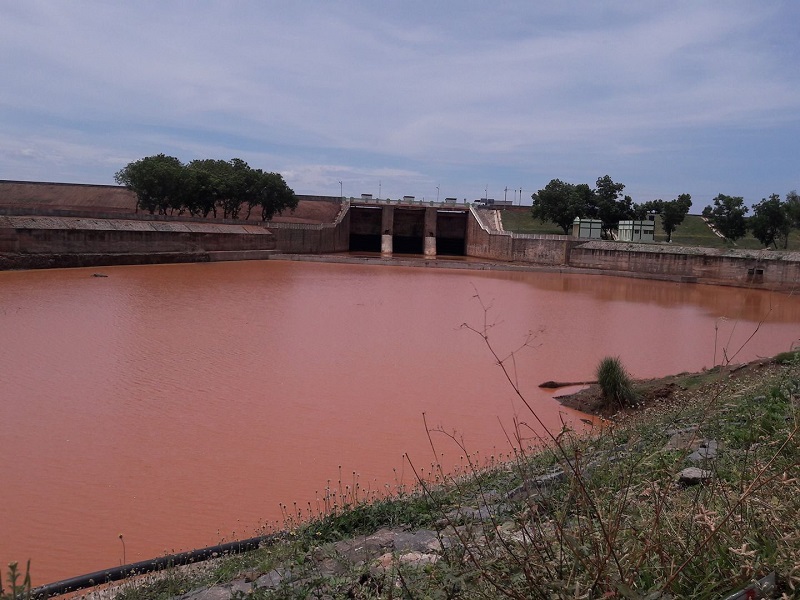 When we were at Sulankurichi village, we used to go to the river 'Manimutharu' which was flowing through the village, with my father. (There is a dam now across the river) We used to dive and bathe in the river and our father used to perform Sandhyavandanam, Gayathri japam etc. on the shore. One incident comes vividly to my mind pertaining to our daily visits to the river. We usually took the road to the river. However, we could go by a short cut, by crossing the paddy fields. Since we could not tread the paddy crops, we had to walk on the border (வரப்பு ). One day, on the way to the river, the first boy Raghu suddenly stopped and shouted 'snake' Actually he had seen a big lizard (ஓணான்), but mistook it for a snake in the early morning light. My father instantly stopped and turned us back to the house. When the first person we came across enquired as to why we had returned without going to the river, he truthfully replied that his son saw a snake and as the omen was not good we were returning. He told the second person that we all saw a big snake. Progressively the snake's size and type went on changing till he told my grandmother on our returning to the house, 'while going to the river, we saw an 18' black cobra. On seeing Raghu, it raised its hoods and hissed and was about to bite him. Due to the Punya done in previous births by us and our forefathers, Raghu escaped today. Not only Raghu but all of us might have been bitten by this cobra.' My grandmother, my grandfather, as well as my mother and Vanaja my sister were rattled by my father's vivid description of the black cobra and my grandmother immediately said, 'It is nothing but evil eyes. Some very evil eye ( கொள்ளிக்கண்) has seen my son and grandsons with jealously'. She then made a Dhrishti Pariharam (antidote for Evil Eye) by burning some broomsticks and showing the flame to us with some chantings. As the broomsticks had some salt sticking with them, some crackling sound was emitted by them during burning which instantly confirmed my grandmother's worst fears of the very evil eye. When we were at Sulankurichi village, we used to go to the river 'Manimutharu' which was flowing through the village, with my father. (There is a dam now across the river) We used to dive and bathe in the river and our father used to perform Sandhyavandanam, Gayathri japam etc. on the shore. One incident comes vividly to my mind pertaining to our daily visits to the river. We usually took the road to the river. However, we could go by a short cut, by crossing the paddy fields. Since we could not tread the paddy crops, we had to walk on the border (வரப்பு ). One day, on the way to the river, the first boy Raghu suddenly stopped and shouted 'snake' Actually he had seen a big lizard (ஓணான்), but mistook it for a snake in the early morning light. My father instantly stopped and turned us back to the house. When the first person we came across enquired as to why we had returned without going to the river, he truthfully replied that his son saw a snake and as the omen was not good we were returning. He told the second person that we all saw a big snake. Progressively the snake's size and type went on changing till he told my grandmother on our returning to the house, 'while going to the river, we saw an 18' black cobra. On seeing Raghu, it raised its hoods and hissed and was about to bite him. Due to the Punya done in previous births by us and our forefathers, Raghu escaped today. Not only Raghu but all of us might have been bitten by this cobra.' My grandmother, my grandfather, as well as my mother and Vanaja my sister were rattled by my father's vivid description of the black cobra and my grandmother immediately said, 'It is nothing but evil eyes. Some very evil eye ( கொள்ளிக்கண்) has seen my son and grandsons with jealously'. She then made a Dhrishti Pariharam (antidote for Evil Eye) by burning some broomsticks and showing the flame to us with some chantings. As the broomsticks had some salt sticking with them, some crackling sound was emitted by them during burning which instantly confirmed my grandmother's worst fears of the very evil eye.
My grandfather had some human weaknesses also. The most prominent of these weaknesses were playing bridge and seeing movies. My grandmother who did not approve his playing cards forbade him from playing. But she used to relent whenever my father or any of the grandchildren pleaded with her to allow him so that we all can pass time. I became an avid Bridge addict only after learning the rudiments of the game from my grandfather and playing with him. I became a reasonably good player and won a number of tournaments in Nagpur in Duplicate, pairs and individual events. My wife, Vijaya who probably inherited from our grandmother (her grandmother also) a great dislike for her husband playing Bridge, used to be very much disgruntled during the tournament days, but was greatly mollified when I brought home a lot of prizes. I made it a point to tell the organizers to give some household items as prizes. With dramatic turn around, Vijaya used to show off my prizes to her neighbours in the colony as if she herself had won the prizes. Even when we came to Madras for my mother-in-law's death in April 1976 and stayed back for the summer holidays, I took part a tournament and brought a beautiful table-lamp as first prize. My sisters-in-law, Jayam and Malathy appreciated the prize very much. I played tournament Bridge for about 18 years, but left playing after I had a massive heart attack in 1983. Two reasons for this were that I was transferred to Bangalore where I could not get a suitable partner and also the strain and excitement which tournament Bridge bring to a good player were forbidden to me by my cardialogist. However, I keep in touch with Bridge by reading and solving Bridge columns in Sunday Hindu and Indian Express.
I had mentioned earlier that my grandfather used to shout even at his grandchildren sometimes. Invariably, he used to shout during Bridge playing sessions.l Gopu Anna (my cousin and Amritha's maternal uncle) and Kannan (of Adyar, my brother-in-law) were almost invariably the targets of his wrath. He had ample reasons for his anger as Gopu anna was equally adept in the art of chicanery like Kannan (who taught me the rudiments of this art, described earlier in my articles) used to partner regularly and used code and sign languages during the game contrary to all rules. My brother Parthasarathy has already described their modus operandi. So I will not repeat the details. My brother Sampath, who was an extrovert, preferred talking with friends to sitting and playing Bridge. However, he was specially requested to come for playing when we were short of one player. Sampath being a novice and my grandfather, being an expert, he always took Sampath as partner on such rare occasions to maintain the balance in the sides. Normally, Sampath's mind would be somewhere else while playing and he would not be listening when he was dummy and my grandfather asked to play some card from the dummy. At such times, my grandfather became wild and used to shout, 'You, Padur Mundam, Kuninju Pakkiraya?', shortening the word 'Kuninju' to another three letter vulgar word. Sampath invariably avoided playing Bridge, fearing the wrath of my grandfather. I think with sadness in my heart how proud my grandfather would have been if he had lived for some more years to see the Padur Mundam of his wrath pass very tough examinations like ICWA and Company Secretary by his hard work and rise to a very high position as Director (Finance) in a multi crore company, like IBP. The second human weakness of my grand father was his extreme fondness for seeing movies. From the time when India's first silent movie, Raja Harishchandra came out till his last breath in 1966, he retained this weakness and went regularly to all the Tamil movies. When we went to Sulankurichi village for summer vacations, we could certainly expect at least two bullock cart trips to Kallakurichi and/or Thyagadurgam, for seeing the latest movies in tent theatres. We used to start in early morning with lot of food packages, big Koojas (typical South Indian containers) of drinking water, etc. as if we were going to a far off place, instead of to a town about six to seven kilometers away. I still relish the memory of these trips.
After my grandmother's death in 1954 my grand father sold his properties in the village and came and settled with my parents at 25, Vedhachala Gardens (Agraharam) in Madras. I can now see what a wrench it would have been for my grandfather to sell of his fields and the palatial house in the center of the village, where he had lived for about 70 years and where his dear wife lived with him and where so many of his children and grandchildren came every year to brighten their drab village lives. When we, his grandchildren are filled with so many memories and nostalgia after spending a few months for some years in that village, who can describe his feelings when he left Sulankurichi for good. He might have preferred to continue to live there till his end if only his health had been good. But, alas, he suffered from extreme bouts of Asthma and could not live alone. After coming to Madras he was a role model for any aged person,. Living with his son and his family. He never interfered with anybody's affairs and gave his valuable suggestions only if asked. He was never idle but was doing some household job or other all the time and did not do anything against his wishes. My mother was more like a daughter to him than daughter-in-law and she gave great respect and love to him. We of the younger generation have a lot of things to learn from our grandfather and my parents who never considered him as a burden inspite of their own insufficient income to bring up a large family. Both my parents believed in the idea of sharing with their less-endowed relations. My father never bothered to save any money for his future but always helped out close relations in need. I remember that when my aunt, Pankajam Chithi, found great difficulty to make both ends meet, especially when Gopu Anna, her husband and my cousin (whose exploits in Bridge game have already been narrated by me), was living in an army unit in far away places, my father and mother were always there to help her out. I admire Pankajam Chithi, who with single-minded devotion brought up her children, by earning money in whatever possible lawful means such as floating chit funds, etc. She gave her all children good education and they are now well off with daughter Mythili, being headmistress in Sarada Vidyalaya, Madras and her two sons, Murali and Sridhar becoming high ranking army/navy officers, while her other sons Vasu, Raghu and Rangaraju, are in good positions in the private sector. Her husband (my cousin, Gopu anna) died some years back. She has now become an ardent devotee of Kalki Bhagwan and spends her time in much deserved ease with Mythili or Vasu/Rangaraju. At the same time, she is not whiling away her time in unnecessary gossip, but does service to people with Kalki devotees.
I am sorry for the digression, but I have written down whatever came to my memory of my boyhood days. As I mentioned earlier, my grandfather had a great weakness for seeing movies. After coming to Madras he used to go to movies regularly. Luckily for him, my uncle (and father-in-law later) served for many years as Manager in Krishna Theatre and he gave free passes, not only in his theatre, but even for other theatres on a reciprocal basis. My aunt, Rukmini Athai, invariably took my grandfather, whom she loved very much, whenever my uncle gave a pass. Normally my sister Vanaja managed to coax her aunt to take her also. For other places in the pass, there was heavy competition, between my aunts' children, and myself and my brothers. My aunt never considered us as any different from her own children and my parents also loved Kannan, Jayam and other children of my aunt more than their own children. We cannot see such close family bonds in the present day mechanical world. 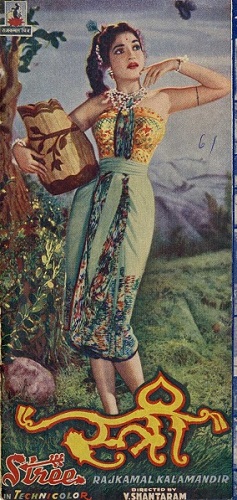 Once, before my uncle became manager of Krishna Theatre, my grandfather was keen to see a Hindi movie, Stree, since it was based on Kalidasa's Shakuntalam and directed by Shantaram (it was also the talk of the town for its titillating music and some hot scenes). My grandfather was standing in the queue for the lowest denomination, which was four annas or so in those days. One young boy, who had cut his classes to go to this picture, was surprised by such an old man, like my grand father, with Thiruman and Srichurnam, in his face, standing in the queue patiently. He asked my grandfather whether he had come to purchase ticket for his grand son/daughter. When my grandfather replied that he had come to see the picture himself, this boy was stunned. After some silence, he asked my grandfather why he had come to see the picture at this ripe old age, instead of going to temple or Katha Kalakshepam. My grandfather, who was very good in instant repartee immediately replied,'I am an old man and will live only for a few more months, whereas you have long years ahead of you. Therefore my need for seeing the picture early is more than yours.' I think that my brother, Parthasarathy has inherited this trait of giving instant repartees from him. Recently, when we all went to beach, after the second get-to-gether arranged by him in his residence on 20th April 2003 some one said that she is mad after mangoes sold in the beach. Parthasarathy immediately came out with a repartee - மாங்கா madதானே, மாங்கா மடையன் இல்லையே, (mango mad is ok, but one should not be Manga Madayan' (slang in Tamil for utter fool). Once, before my uncle became manager of Krishna Theatre, my grandfather was keen to see a Hindi movie, Stree, since it was based on Kalidasa's Shakuntalam and directed by Shantaram (it was also the talk of the town for its titillating music and some hot scenes). My grandfather was standing in the queue for the lowest denomination, which was four annas or so in those days. One young boy, who had cut his classes to go to this picture, was surprised by such an old man, like my grand father, with Thiruman and Srichurnam, in his face, standing in the queue patiently. He asked my grandfather whether he had come to purchase ticket for his grand son/daughter. When my grandfather replied that he had come to see the picture himself, this boy was stunned. After some silence, he asked my grandfather why he had come to see the picture at this ripe old age, instead of going to temple or Katha Kalakshepam. My grandfather, who was very good in instant repartee immediately replied,'I am an old man and will live only for a few more months, whereas you have long years ahead of you. Therefore my need for seeing the picture early is more than yours.' I think that my brother, Parthasarathy has inherited this trait of giving instant repartees from him. Recently, when we all went to beach, after the second get-to-gether arranged by him in his residence on 20th April 2003 some one said that she is mad after mangoes sold in the beach. Parthasarathy immediately came out with a repartee - மாங்கா madதானே, மாங்கா மடையன் இல்லையே, (mango mad is ok, but one should not be Manga Madayan' (slang in Tamil for utter fool).
During his life in Sulankurichi, there was only one thing for which my grandfather had deep hatred. This was the rat. His hatred for rats is probably shared by all villagers, as they eat away valuable crop, seeds, etc. Our house in Sulankurichi was infested with rats. My grandfather used to catch them with mouse traps. But, instead of leaving them at some far away places, like we in the city normally do, he killed them as leaving them anywhere else also will lead to their continued devouring of crops, etc. I remember very well that he used to put these rats in a gunny bag, and after tying both ends, dashed them against the ground again and again. He took a ghoulish pride in killing the rats in such manner, showing how deep-rooted was his hatred for the rats and how much of his crops they might have devoured to incite such hatred. Later in his last days, when he suffered physical torture due to terrible bouts of Asthma, he sincerely regretted his killing the rats in such a way and told us that his suffering was nemesis visiting him for his cruelty to the rats. His words of sincere regret still ring in my ears and I have developed great love for animals.
My grandfather had great love for Tamil books and Tamil magazines. He was completely illiterate for some years but afterwards learned both Tamil and English languages by his own Herculean efforts, without going to any school or engaging any tutor. 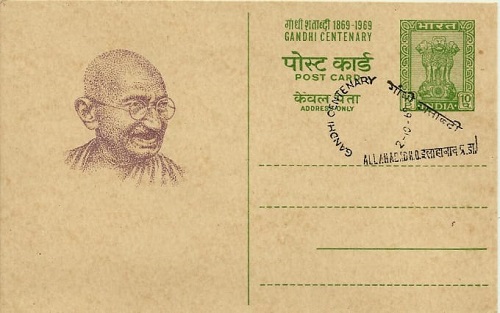 He used to write his letters to his relatives in a post-card. He filled this small post-card with so much information, that if Guinness or Limca Book of records was available at that time, he would most certainly have found a place for writing most material in a post card. He was a voracious reader of Tamil novels of those days, especially those by Vaduvur Doraiswamy Ayyangar and Vai.Mu. Kothainayagi Ammal. He was very emotional while reading, and used to weep like a child when there was some tragic ending. Once, he met Vaduvur Doraiswamy Ayyangar, the great novelist during a marriage function. The time for Mangalya Dharanam was approaching when he saw Vaduvoor. On seeing him, he forgot the surroundings and asked the novelist as to why he had killed the heroine in his latest novel. The great novelist's repartee was classic. He said, 'It was her fate to die. Why are you now bothering about this and pestering me the reason for her death, especially on such an auspicious occasion as this.' My grandfather immediately realized his mistake and apologized profusely. On another occasion, he had been to one person, named Azhwar, whose home-made hair oil was very popular. He used to boast that those using his hair oil will have abundant hair, not only on their heads, but also on their palms which they used for rubbing the oil on their heads. My grandfather was sent to this hair oil wizard by my sister, Vanaja as he was going to the temple and Azhwar's house was on the way. When he approached Azhwar for the hair oil, he was stunned. Then he told him that though his oil was very effective, it will not make any hair grow on the bald head of such an old man as my grandfather. He was very repentant after my grandfather explained that the hair oil was for his granddaughter and profusely apologized for his hasty and unwarranted remarks. He used to write his letters to his relatives in a post-card. He filled this small post-card with so much information, that if Guinness or Limca Book of records was available at that time, he would most certainly have found a place for writing most material in a post card. He was a voracious reader of Tamil novels of those days, especially those by Vaduvur Doraiswamy Ayyangar and Vai.Mu. Kothainayagi Ammal. He was very emotional while reading, and used to weep like a child when there was some tragic ending. Once, he met Vaduvur Doraiswamy Ayyangar, the great novelist during a marriage function. The time for Mangalya Dharanam was approaching when he saw Vaduvoor. On seeing him, he forgot the surroundings and asked the novelist as to why he had killed the heroine in his latest novel. The great novelist's repartee was classic. He said, 'It was her fate to die. Why are you now bothering about this and pestering me the reason for her death, especially on such an auspicious occasion as this.' My grandfather immediately realized his mistake and apologized profusely. On another occasion, he had been to one person, named Azhwar, whose home-made hair oil was very popular. He used to boast that those using his hair oil will have abundant hair, not only on their heads, but also on their palms which they used for rubbing the oil on their heads. My grandfather was sent to this hair oil wizard by my sister, Vanaja as he was going to the temple and Azhwar's house was on the way. When he approached Azhwar for the hair oil, he was stunned. Then he told him that though his oil was very effective, it will not make any hair grow on the bald head of such an old man as my grandfather. He was very repentant after my grandfather explained that the hair oil was for his granddaughter and profusely apologized for his hasty and unwarranted remarks.
As I have mentioned earlier, my grandfather suffered severe torture in the last few years of his life due to acute bouts of Asthama. He suffered so much that once he even tried to stab himself to get permanent relief from this ailment. Also as is usual in most very old people, he had severe Arthritis due to which he could not stand on his own whenever he was lying or seated on the floor. Normally, there was no problem when he sat for his meals as some one was always on hand to help him get up from the floor. Being very orthodox, he steadfastly refused to take his meals on the dining table and always took his food on banana leaves or silver plate on the floor. He maintained this till his very end. The real problem was for his going to the toilet. Normally any of his grandchildren, like myself, Sampath, Raghu or Parthasarathy were available, when he wanted to answer the call of nature. We used to escort him to the toilet and waited outside till he finished his toilet and had washed his hands. He used to call the name of the grandson who escorted him, when he was ready to come away from the toilet. We then helped him to get up from his squatting position. And escorted him back into the house. While Parthasarathy was his favourite grandson for this job, the least preferred was Sampath for this chore. The reason for this was due to the following incident:
Once in the afternoon time when no one was in the house except Sampath and my grandfather. My grandfather felt an urgent need to answer the call of nature. Sampath, being a very obliging and very well-behaved boy, readily escorted my grandfather to the toilet and left him there, waiting outside patiently till he could call his name. In the meanwhile, Sampath's friend, Cheenu of No.7 came to see him. Sampath started talking with Cheenu and in the excitement of some argument with Cheenu completely forgot my grandfather and the fact that he was the only other person in the house. My grandfather, as usual called Sampath after his washings were over and he was ready to go back. But there was no Sampath to escort him back as he had gone away with Cheenu conversing excitedly as was his habit. Sampath's mistake was absolutely unintentional as he was never one to slight his elders or neglect them in any way. My grandfather went on shouting Sampath's name with increasing anger. His shoutings had induced his Asthmatic bout and he suffered immensely. His shouting and wheezing continued for about one hour till my father came back from school. My grandfather was continuously hurling choice epithets at the abscounding Sampath, the least vulgar of which was Padoor Mundam. Sampath came back after about three hours during which period the thought of his grandfather never entered his head. So deeply was he immersed in his conversation with Cheenu. When he came back near the house, he remembered that he had left his grandfather in the toilet. He entered the house with great trepidation, as he had been a victim of grandfather's wrath in bridge- playing sessions. On seeing him, my grandfather pounced on him and shouted 'Did you go for shaving somebody (சரைக்கப் போனாயா) after keeping me in the toilet? Could you not wait for a few more minutes you Padur Mundam, etc. etc. I can recall that Sampath did not utter a single word as my grandfather was venting his pent up anger on him. I remember with great pride my departed brother Sampath who silently bore my grandfather's shouts, as the mistake was his. When I think how present day children of even very tender age, like Divya, Deepti (my grandchildren) or even Srinidhi (my niece's daughter) do not tolerate hot words even from their parents, Sampath's penitent silence stands out as a shining example, how we, in general and Sampath in particular respected our elders. Grandfather always preferred the ever patient and docile Parthasarathy to escort him to the toilet, whenever he was available. Parthasarathy always escorted my grand father with deep respect and listened to his conversation with genuine interest. During the last five or six years of my grandfather's life it was only Parthasarathy who escorted my grandfather to the toilet. Thus, Parthasarathy has the unique distinction of serving my grandmother during her last days by patiently reading books and magazines to her: serving my grandfather with great respect and courtesy by escorting him to the toilet in his last few years and now attending to our bed-ridden mother in her last few years. When I go to see my mother, she always tells me that Parthasarathy takes leave of her before going out anywhere. As Parthasarathy wrote in his touching article, 'When my mother sang', many of us tend to forget that very old people were also young once, and had so many dreams and aspirations. Now, when they are bed-ridden and helpless, they continuously think of and bless their children and grandchildren. Their love for us is entirely unselfish and they do not need anything from us except a little love and some conversation with them.
Parthasarathy and Amritha tell me that just after two days after my visiting her, my mother tells them that it is a long time since Gopalan came, telephone him and find out whether he is well etc. Tears come to my eyes when I think of the complete unselfish love of my mother and how much remiss I had been in my hot younger days. I recall how my mother served my grandfather with unflinching devotion and how she helped her sisters and other relatives during their confinements and on various other occasions (for example, when her sister, Padma Chithi was not well and could not take proper care of her children, it was my mother who took care of them for many years).
I am sure that our 'grand' Sulankurichi Thatha is blessing all of us wherever he is.
So long....
S.Rajagopalan
May 2003
|
