FIVE SENIORS ON ANOTHER SPIRITUAL JOURNEY - A PHOTOLOGUE
Varanasi, Gaya, Prayagraj, Chitrakoot and Ayodhya - 17th to 23rd February 2026
by S.Parthasarathy
FIVE SENIORS ON ANOTHER SPIRITUAL JOURNEY - A PHOTOLOGUE
|
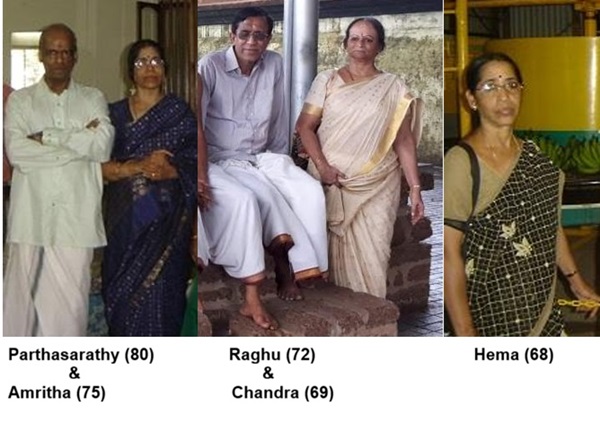
Raghu, Chandra, Hema, Amritha and I were together in Sydney for about two months in 2009/2010. We had gone together on a number of day visits. We also visited Cairns (Great Barrier Reef) and Coff's Harbour for a few days each. Later we have been meeting in Kanchipuram, Arumbakkam and Bangalore frequently (i.e. whenever Raghu & Chandra are in India) and visiting temples. Our first major outing together in India was to Ayodhya, Naimisharanyam and Lucknow in August 2022. You can read about it by clicking here. Flight takes off before time
Warm welcome at the Varanasi Airport
Temple visits
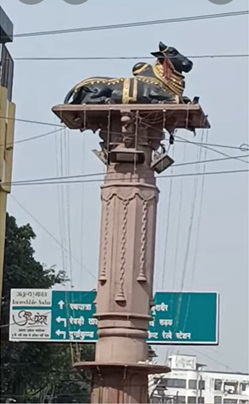
Nandi Circle
Kulhad
Ganga Aarti
We went back to the hotel and ordered chapathis, curd and a Jain (no-onion, no-garlic) subji. We also ordered hot milk, a routine which we followed on all the days. Next day, we were to leave at 5.15 AM for the dawn boat ride in the Ganges.
Google Maps cannot find Assi Ghat
Google Maps diverts us
Bodh Gaya
Gaya Shradham
Restaurants in all hotels in U.P. open only after 8.30 AM. While some hotels provide kettle and tea-bags, our hotel in Varanasi did not. So at 6.30 AM I stepped out of the hotel to buy tea in the thermos that we had thoughtfully carried. But I hurriedly came back inside as I saw three dogs on the road. Fortunately Pankaj was awake and we both went out, had our tea and got the thermos filled. There was enough tea for all of us to sustain us till a late breakfast.
Kaal Bhairav Temple and Saranath
Dip in the Triveni Sangam
Chitrakoot to Sringverpur to Ayodhya
Ram Mandir, Hanuman Garhi and the return flight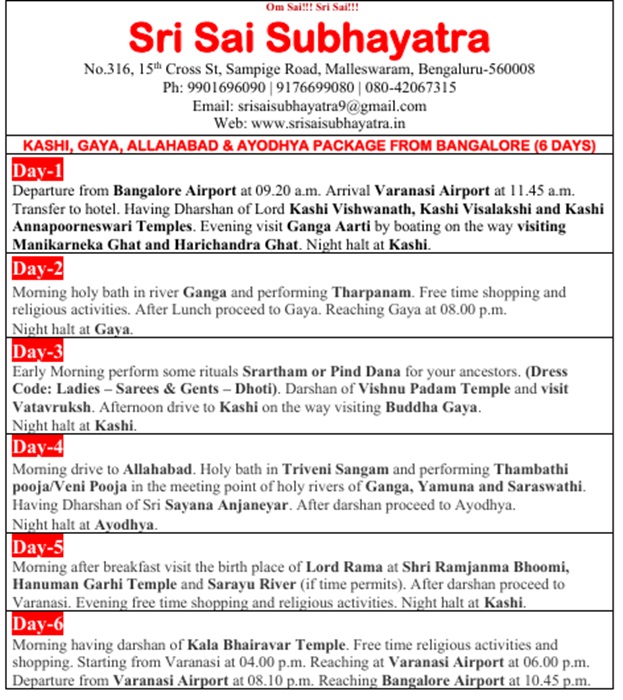 On completion of that successful visit, we had decided that we would again visit Ayodhya after Ram Mandir is constructed. In November 2025 we were in Kanchipuram and it was decided that we would definitely make the trip in February 2026. I was keen on visiting Varanasi, Hema was keen on Gaya and Chandra was keen on Allahabad (Prayagraj). Raghu and Amritha had no specific choice. So I started looking for a suitable guided tour. I found that Sai Shubhyatra of Bangalore was offering an itinerary we all wanted and the cost was an all-inclusive Rs. 40,000/- per head. WhatsApp messages and calls flew back and forth and I made a few phone calls to the agency and was about to pay the advance. Fortunately I found in time that the dates of the tour included Maha Sivarathri. My research had shown that Prayagraj and Varanasi would see lakhs of people between Sankaranthi and Sivarathri for the Magh Mela in 2026 (the year following Maha Kumbh which was in 2025). So we decided to make the trip on our own after Sivarathri. Chandra wanted Chitrakoot to be added. So our itinerary was modified. The best plan would have been to fly to Gaya and then travel to Varanasi, Prayagraj, Chitrakoot and Ayodhya by road and fly back. But after the Indigo fiasco in December 2025, netizens felt that Gaya flights are more likely to be disrupted than Varanasi / Ayodhya. So our itinerary was finalised - Chennal/Bangalore-Varanasi-Gaya-Varanasi-Prayagraj-Chitrakoot-Ayodhya-Bangalore/Chennai with a night halt in every place. We completed our trip withouf any major problem. But my advice to senior citizens would be ,' Plan a tour to the North on your own only if you have a good command over Hindi and if your risk-taking ability is higher than normal. Otherwise a tour agency would be the best option.'
For this tour four items needed to be tied up well in advance and a couple of other items a few days before reaching the place. The four major items are Air travel from and to Chennal / Bangalore, vehicle for local travel, stay in decent hotels and the venue / Purohit for performing Gaya shradham. I fixed up all these in December 2025 itself. I shall describe these first and talk about the other items later.
Air Tickets (Indigo Airlines)
I made the flight bookings on 16th December 2025 more than two months before the journey. Though Air India and Akasa Airlines fly to Varanasi, Indigo Airlines is the cheapest. The basic fare from Bangalore to Varanasi (as well as Ayodhya to Bangalore) was about Rs 7000/. (though we paid Rs. 7800 including some add-ons) From Chennai, it was just Rs. 800/- extra. Though 80 years old, I am comfortable and reasonably good in using the net for various activities (netbanking, IRCTC booking, online shopping etc). Yet I found the Indigo website to be very user-unfriendly. I decided to use Goibibo, though it meant paying an additional 100 Rs. per ticket. Their website is very user-friendly and they have a lot of offers by which you get back more than the 100/- Rs paid.
Tour operator (Hotel & Road Travels)
I had selected Ma Bhawani Travels, Lucknow to organise our tour to Lucknow, Naimisharanyam and Ayodhya. Since we were very happy with this agency, we decided to contact them again. Saurabh Shukla was very courteous whenever I spoke to him. Hotel booking for all the six nights as well as vehicle for the entire trip (from Varanasi Airport on 17th February to Ayodhya Airport on 23rd February) were fixed in December 2025 itself. The tour operator's final quotation was reasonable. Our overall cost for 6 days (excluding the cost of shradham / Pind Dhan) was estimated to be Rs. 47,000/ per person for 6 days as compared to the Rs. 40,000/- for 5 days that Sai Shubhyatra were charging. With a vehicle exclusively for us, we would have tremendous flexibility unlike a conducted tour. And we could have lunch / dinner where we would get Jain food. More importantly we could change our plans at any time. Shuklaji promised to send us a new vehicle which he did. We had an excellent trip thanks to this tour agency. (Details of this agency are available elsewhere in this write-up.)
Purohit for Gaya shradham and Pind Dhan
You can book Purohits online. But since many known persons visit Gaya regularly, most people fix the agency for shradham / Pind Dhan based on personal feedback. Most people I asked recommended Karnataka Bhawan, Gaya. My nephew Mohan, a staunch Vaishnavite, had recently performed shradham in Gaya. He spoke highly of Pandit Abhiraj of Ram Gopal Bhawan, Gaya. I got in touch with Mr. Abhiraj and fixed him about a month before our trip. (Details of this agency are available elsewhere in this write-up.)
With the major items taken care of, I turned my attention to the other items which were
- Darshan in temples at Varanasi
- Ganga Aarti at Varanasi
- Dawn boat-ride in Varanasi
- Sightseeing in Bodh Gaya
- Dip at Sangam in Prayagraj
- Guide at Chitrakoot
- Darshan in Ram Mandir at Ayodhya
I was about to book online tickets when Shuklaji (owner of Ma Bhawani Travels) told me that there was no need to do anything before reaching Varanasi. He assured me that our driver would take care of most of the above and he would send an application for VIP Darshan in Ayodhya. For Ayodhya Darshan, Mohan (my nephew) had also promised to help. We were all set for 17th February 2026.
Day - 1 (17th February 2026)
On 17th Feb, Amritha and I left at 6.15 AM. picked up Hema, reached the Bangalore Airport, completed security and were waiting at the departure gate from 8 AM for the flight at 9.20. Chandra and Raghu's flight from Chennai was on time and they joined us soon after. The Five Musketeers were to be together for the next 6 days.
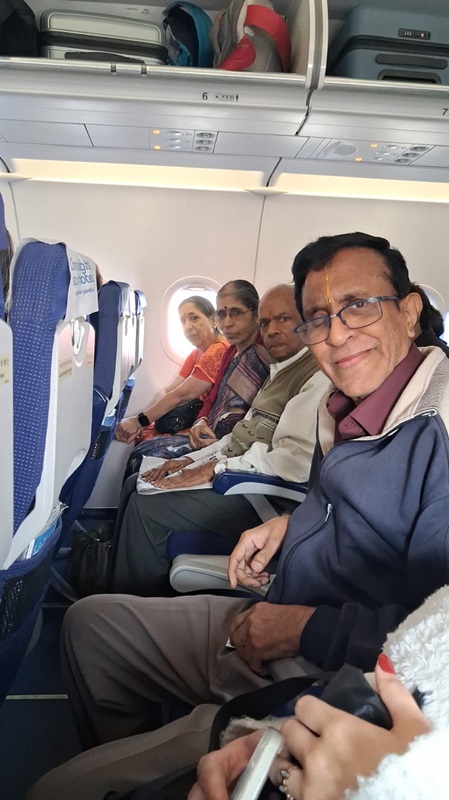 Boarding was started about 40 minutes before the flight but was completed quickly. As soon as every passenger was settled, the pilot prepared for take off, though it was only 9 AM, twenty minutes before the scheduled time. Indigo is definitely efficient.
UPMA on the Boarding pass
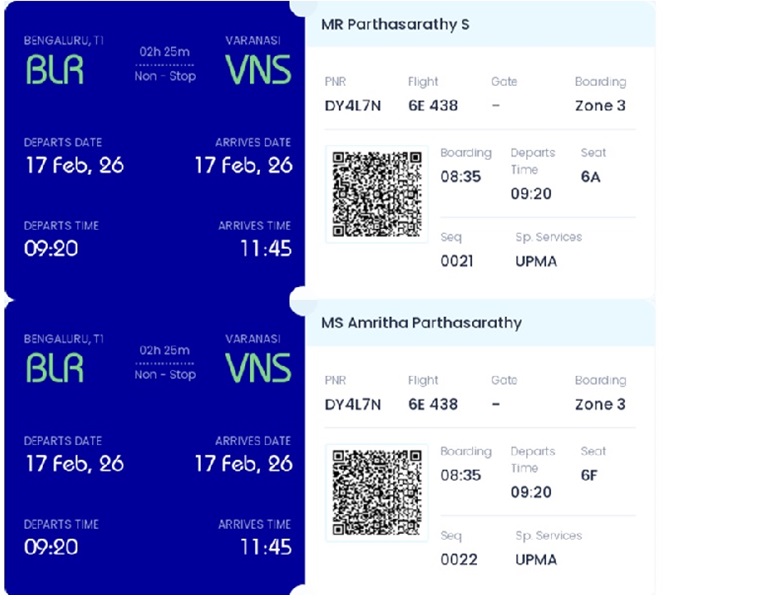 I have travelled a lot and have generally found Veg or NV or Jain printed on the boarding pass. For the first time I saw that Amritha's and my boarding pass had 'UPMA' printed on it. The Upma that was served was quite good. We found that it was manufactured by Triguni Foods in Tiruverkadu and is available on Amazon.
K.B.Sundarambal heard in Varanasi Airport
I had read that Lal Bahadur Shastri International Airport, Varanasi was the first in India to introduce announcements in Sanskrit. But what we heard as we were waiting to receive our baggage stunned us. It was clearly the voice of K.B.Sundarambal on the loudspeakers. I thought Kasi Sangamam was being continued. After listening for a minute, we found that it was the announcer's voice, but all of us could swear it was KBS. Earlier I said that the flight took off 20 minutes early. It landed early but we had to wait for nearly 45 minutes for our baggage to be received.
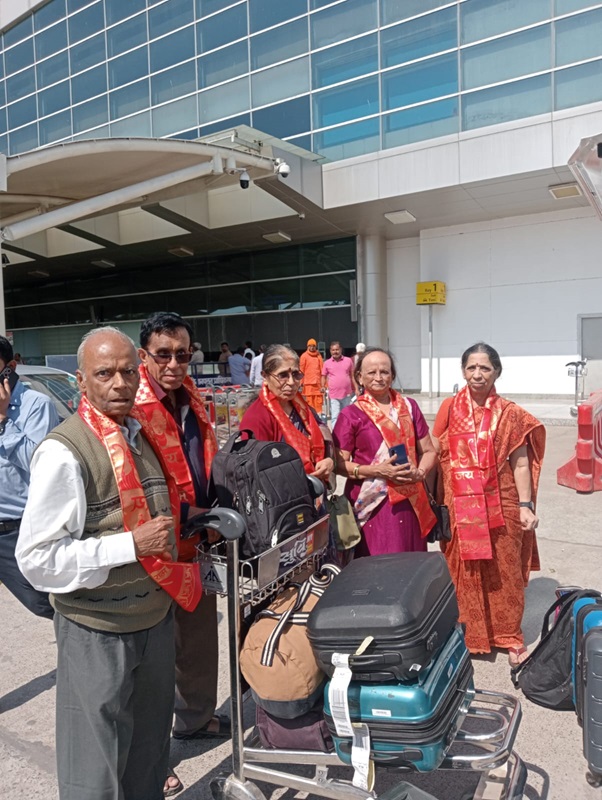 I had received a message from Shuklaji that Pankaj Pande, our driver for the entire tour would receive us at Varanasi Airport with a new Kia Carens vehicle (No-UP32RT226). Incidentally, I had not heard about this vehicle type and read the message as Carena. When I contacted the driver the previous day, I had asked him ,' How is this Kareena vehicle?' He corrected me. I will never forget Kia Carens. After we came out of the airport, the driver stopped the vehicle, opened the boot and took out five Saffron shawls and draped one on each of our shoulder.
 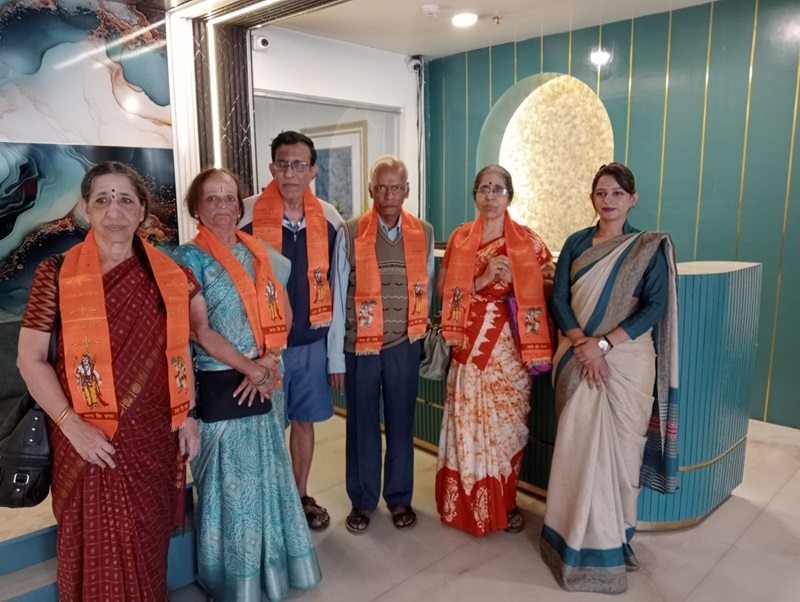 The trend of using "Jai Shri Ram" printed chunnis to welcome guests and devotees in Uttar Pradesh, though an old tradition has intensified significantly after inauguration of the Ram Temple in Ayodhya. We were again given a similar welcome in Hotel Celestial Inn at Prayagraj.
Pankaj Pande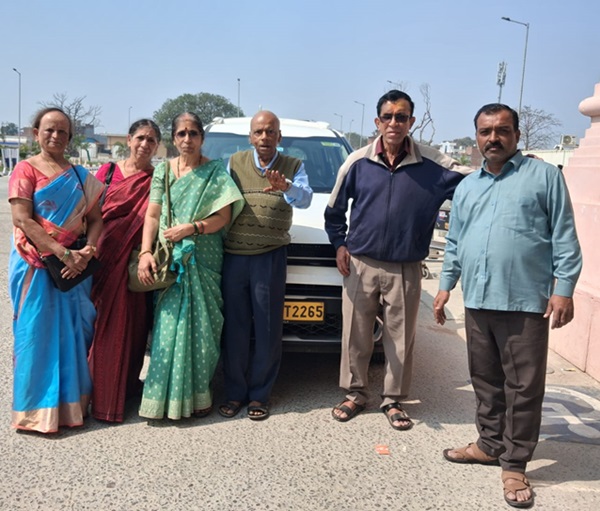 Pankaj Pande (on the extreme right) was our driver and guide for the next 6 days. He managed everything very well and we definitely spent less than what we would have otherwise paid. Of course we tipped him generously at the end of the tour apart from providing daily allowance for his food. The vehicle which was to carry us for over 1000 kms can be seen in the photo.
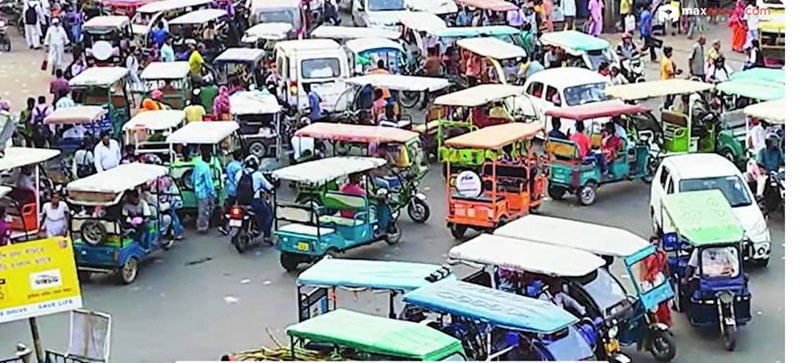 The earlier petrol-driven Tuk Tuks have all been replaced by e-vehicles. Apparently there is very little control on their proliferation and the locals feel they are a nuisance, Our driver Pankaj Pande told us sarcastically ,' Jitne bi chahiye, Tuk Tuk yahan se Bangalore le jayiye. Humen acha hoga,' (Take away as many Tuk tuks as you want to Bangalore. We will be happy). One next to the driver and 4 in the back can travel reasonably comfortably in a Tuk tuk. While going to the temple we had hired two tuk tuks but on the way back after the Ganga Aarti we could get only one. Hema, Amritha and I shared a seat and the 30 minutes of travel was a punishment to us during the bumpy ride. Though Hema and I sat on the edges, Amritha kept sliding to the floor. To add salt to the wound, Raghu who was sitting comfortably told Amritha,' You have become small.' We vowed that we would never again travel 3 in a seat in a tuk tuk.
There are over 2000 temples in Varanasi. Out of them 6 have been listed as the most important.
- 1. Kashi Vishwanath Temple
- 2. Shri Vishalakshi Mata Shaktipeeth Temple
- 3. Annapurna Devi Temple
- 4. Kaal Bhairav Temple
- 5. Durga Kund Temple
- 6. Sankat Mochan Temple
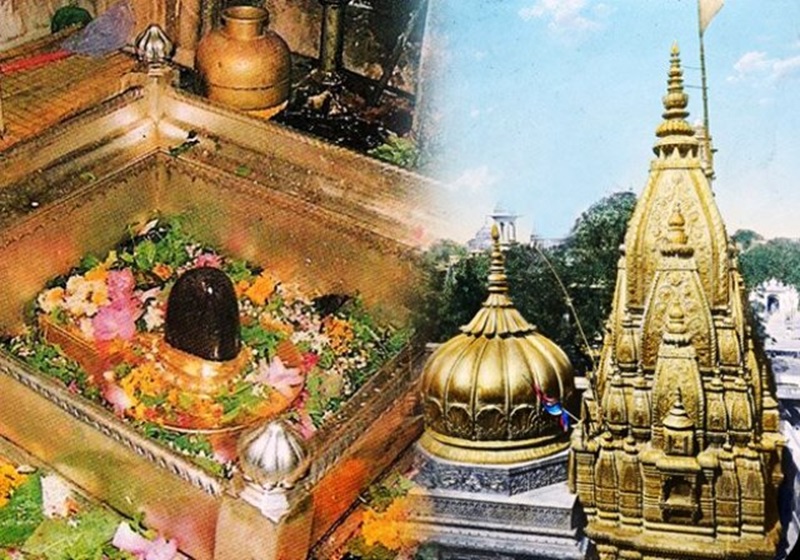
Due to the time constraint, we could visit only 4 temples - the first 3 on the first day and Kaal Bhairav Temple when we returned to Varanasi from Gaya. The most-talked about Modi project in Varanasi is Kashi Viswanath Corridor - a massive 5-lakh-square-foot corridor for a seamless, unobstructed link between the Ganges river and the Jyotirlinga. This complex preserves the original temple architecture while providing pilgrims with modern amenities like escalators, drinking water, and spacious viewing galleries, allowing thousands to offer prayers simultaneously without overcrowding. As we had to immediately go to view Ganga Aarti after Darshan in the temples, We could not walk the entire corridor, But what we saw in the temple precinct was impressive.
In Kashi Viswanath temple, you can book online tickets at Rs. 500/- per person. But the booking had been stopped for a few days from Maha Sivaratri (which was 2 days prior to our visit). Pankaj Pande knew a panda to whom we paid extra. 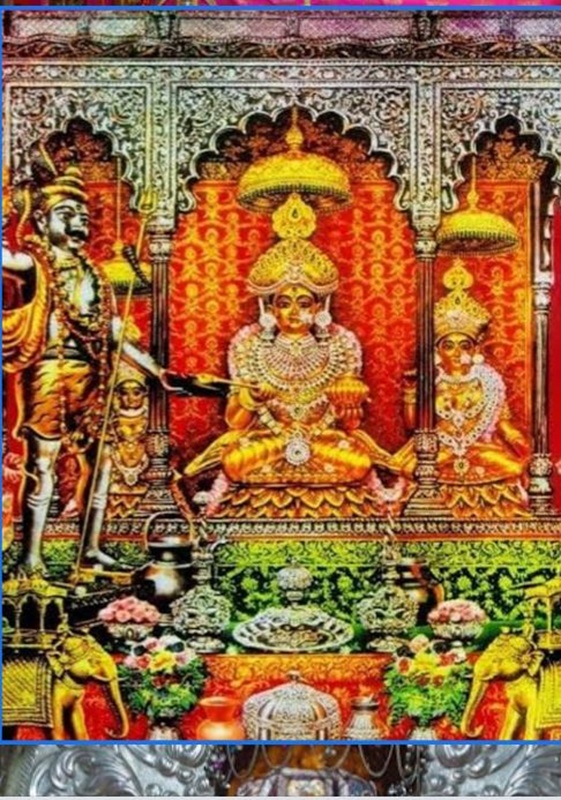 Both of them accompanied us and helped us deposit handbags, mobile phones - in fact everthing except money in a locker. We had a very good Darshan at all the 3 temples. Kashi Viswanath was a 'jarugandi' darshan, but it was a divine experience in Annapoorna Devi and Visalakshi temples as we were very near the deity. Annapoorna Devi Temple is very near Kashi Viswanath Temple and Visalakshi temple is about 300 metres from Kashi Viswanath temple. Annapoorni temple houses two icons of the goddess - one made of gold and other of brass. The brass icon is available for daily darshan. The gold icon can be only seen once a year on the day prior to Deepawali (Photo is of the Gold idol). Scholars believe that the goddess Vishalakshi of the Varanasi temple may have been identified with Annapurna in early times, however over time became a distinct goddess, resulting in two separate temples.
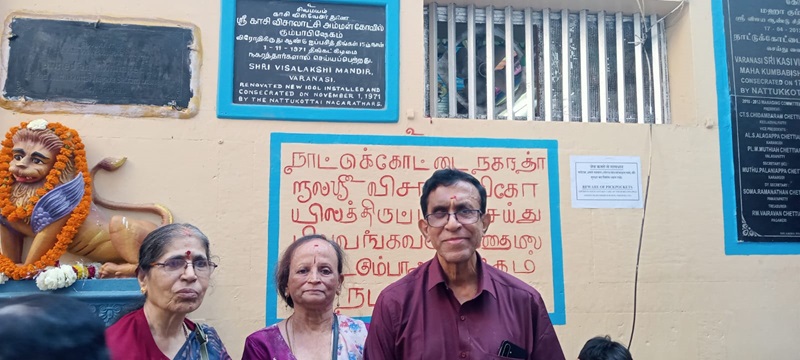 The connection between Kashi and Tamil Nadu is from ancient times. It is believed by many that Kashi and Rameswaram are linked and a trip to one is not complete without a trip to the other. When visiting Kashi became difficult due to the Muslim invasion in the 15th century, the Pandya Kings built a Viswanath temple and called it Dakshin Kasi (Thenkasi). Sri Kasi Nattukottai Nagarathar Satram in Varanasi is a community center for pilgrims from Tamil Nadu.
 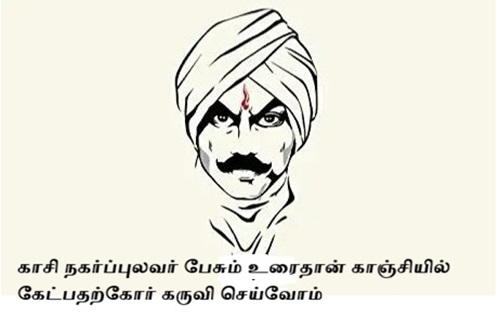 Established in the early 1800s by the Nattukottai Chettiar community, it provides lodging, Tamil Nadu food, and helps with rituals. Visalakshi temple was built by the Chettiars. Bharathiyar's life was enriched by the 6 years that he spent in Kashi. Muthuswami Dikshitar, one of the Trinity of Carnatic music spent 5 years here and adapred Hindustani Ragas like Dwijavanti, Hameer Kalyani etc. in his compositions. There were many other scholars, rulers and famous persons from Tamil Nadu who have spent many years in Kashi. Kashi Tamil Sangamam, an annual celebration, was started in 2022 to celebrate this connection.
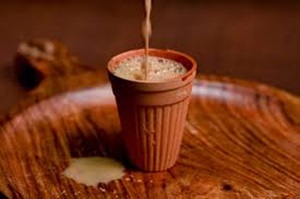 As the tea came in attractive kulhads, I remembered that I first saw a kulhad (a traditional terracootta cup) in 1971 when I went to Calcutta. Kulhads have been a staple in Indian culture for generations, with their origins tracing back to ancient times. These eco-friendly cups were traditionally made from clay, allowing for easy disposal after use. The porous nature of the clay also imparts a unique earthy flavor to beverages, making them a popular choice for serving chai. The tumbler shaped kulhad that is popular now is very attractive. For the next 6 days in U.P., Bihar and M.P. we had our tea in kulhad. It is strange that advanced Southern states use plastic cups while the Northern states extensively use the bio-degradable kulhads.
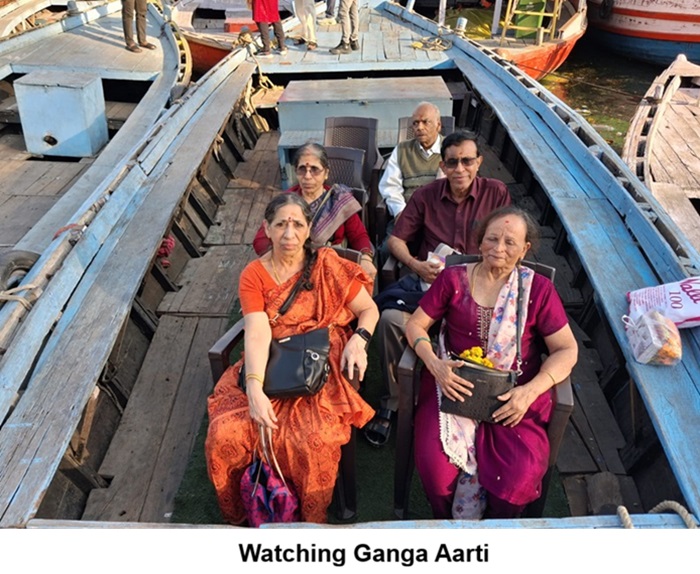
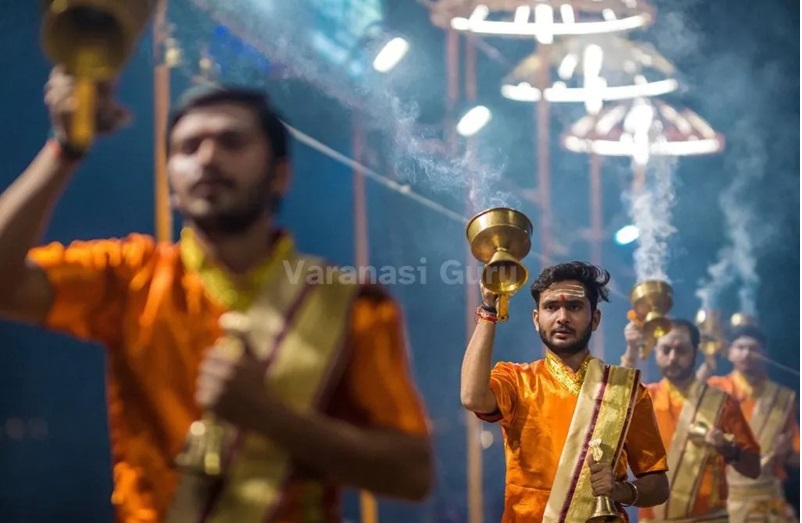
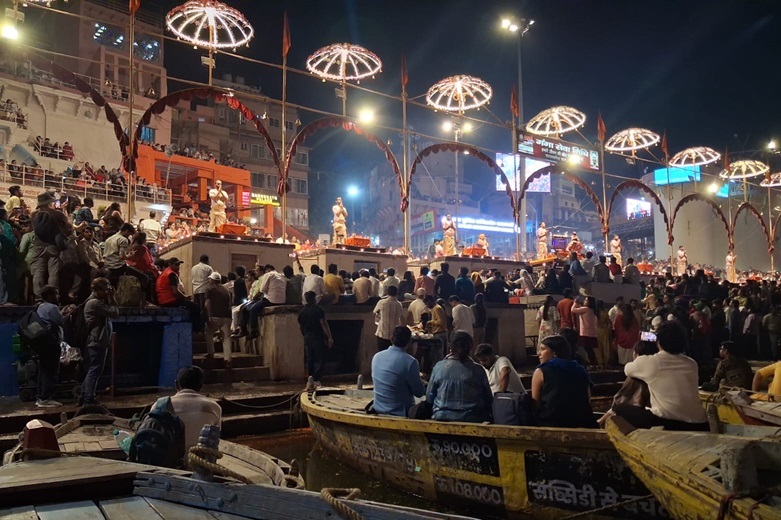
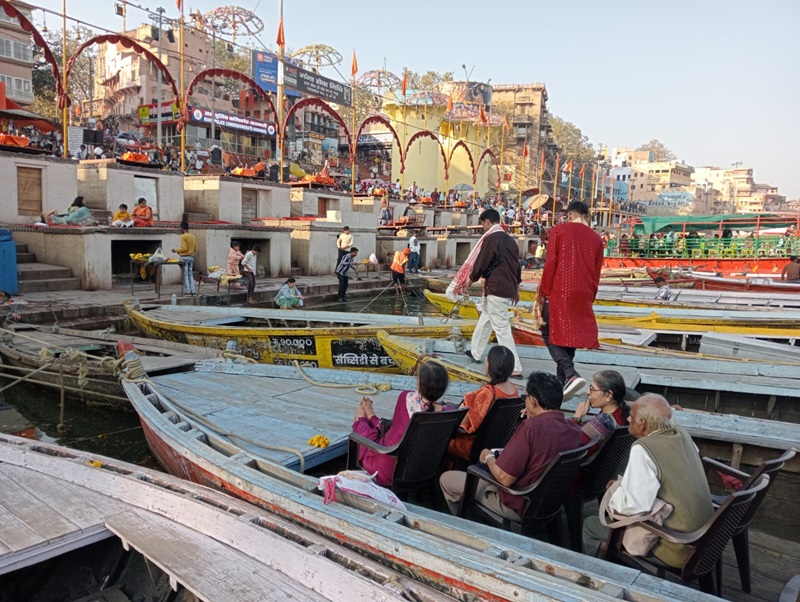 The Aarti begins about 15 minutes after sunset (which was around 6 PM on that day). The evening Ganga Aarti at Dashashwamedh Ghat is the grandest, with multiple priests performing synchronized rituals. I understand that Rajendra Prasad Ghat, located next to Dashashwamedh, also hosts a significant aarti. Watching the aarti from a boat provides a unique perspective, as boats line up along the ghats to offer unobstructed views. Pankaj Pande had arranged ringside seats for us in a boat in the front row almost opposite the Aarthi site. It was worth the Rs. 3000/- that we spent.
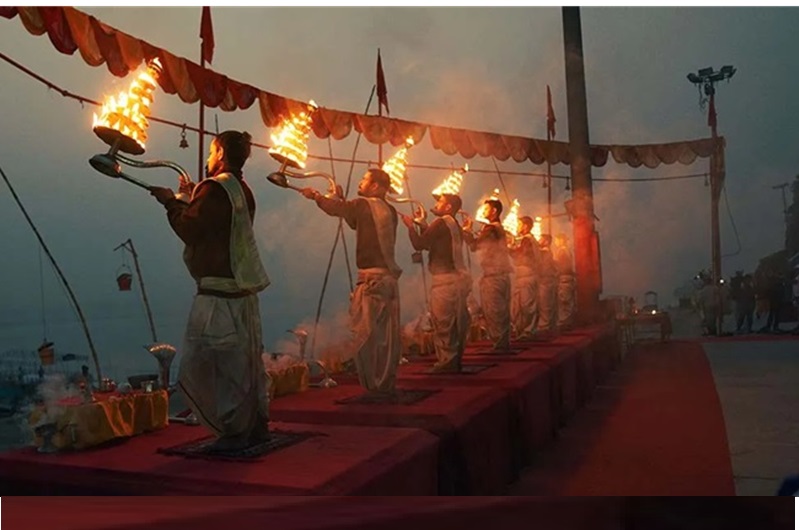
The Aarti starts with blowing of Conch (Shankh) by a priest for more than 2 minutes. This is followed by rhythmic chanting of mantras, ringing of bells, and the offering of fire, flowers, and camphor to the river. Each movement is symbolic — fire represents purity, flowers denote devotion, and incense signifies the spread of spiritual fragrance. The main event is when each priest carries lighted brass lamps. The Aarti lasts for about an hour from the time it starts. 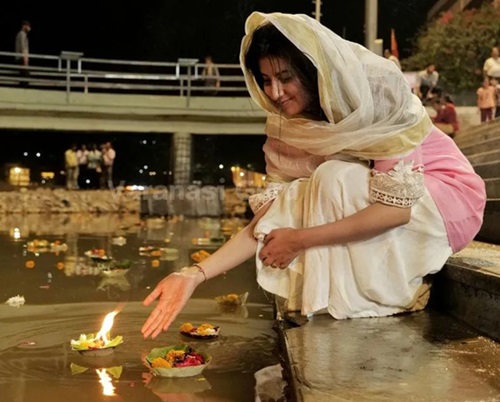 As the lighted brass lamps are shown, hundreds of people offer flowers and lighted lamp on a leaf to Mother Ganga. It is a sight to remember. Amritha, Chandra and Hema also offered flowers and lamp to the Ganga. As there is no photograph of them, I have used an image from the net.
We were advised by Pankaj Pande to leave a few minutes earlier as we had to climb the Ghat steps from the boat which would be difficult when the whole crowd disperses. As we left the boat, we felt a sense of bliss at having had a once-in-a-lifetime experience. I woke up Raghu at 10 PM to tell him that Australia was officially eliminated from the 2026 T20 World Cup following a match washout between Zimbabwe and Ireland on that day.
Day - 2 (18th February 2026)
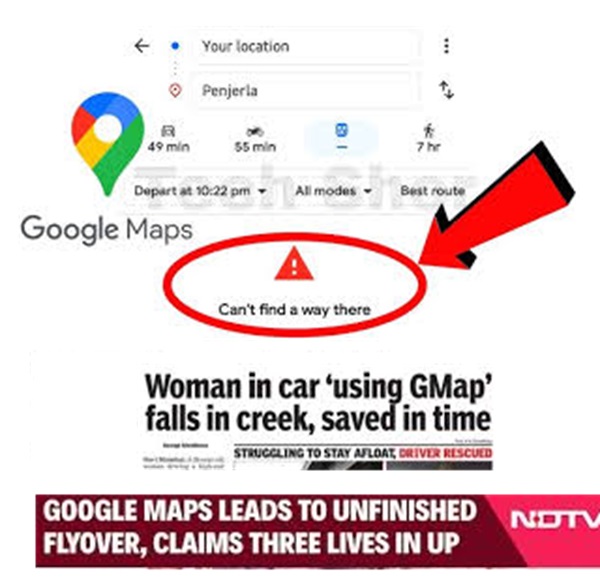

Our day started early on 18th Feb, as we were to take the dawn boat-ride in the Ganges. We were supposed to be in the boat before 6.15 AM when the sun was to rise. We left the hotel at 5.15 and after tea in a roadside shop, were on our way to Assi Ghat. Pankaj Pande set the route to Assi Ghat which we were expected to reach in 20 minutes. After about 30 minutes, we realised something was amiss. 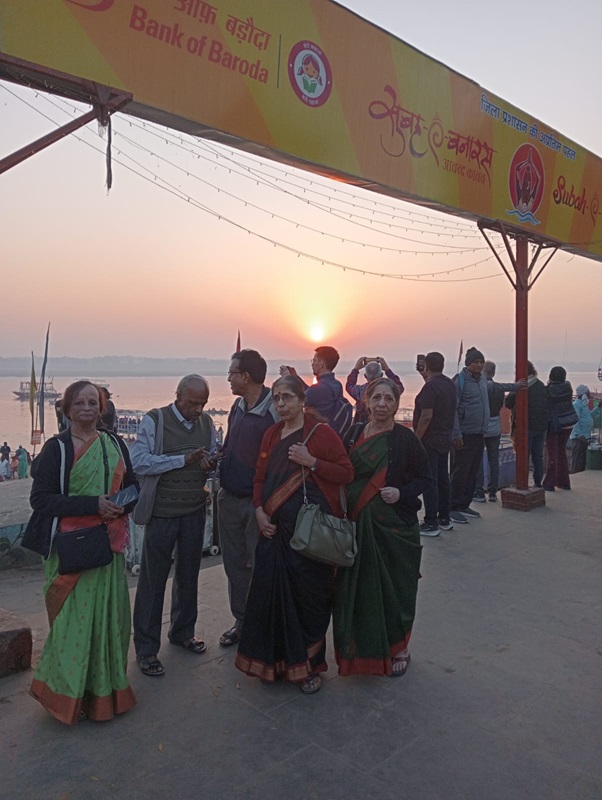 We were passing IP Vijaya Mall for the second time. Pankaj Pande asked the boat owner to send his location and confidently set off. Lo and behold, we were in front of IP Vijaya Mall for the third time. Finally what worked was the good, old manual direction. The boat owner started giving instructions on the phone - ' Go to Kinnaram Baba Ashram, go straight, skip the first roundabout, take right ....' and finally we saw Assi Ghat. It was 6.18 AM and the sun had already risen. But we were just in time for a photo of the sunrise from the ghat, though we missed it from the boat. Our question to Google Maps was ,' Why this கொலவெறி, கொலவெறி?' (Why this kolaveri, kolaveri?)
Hindu pilgrims have long come to Varanasi to die, believing that it will bring salvation. Hence Kashi has been known as the city of death. From time immemorial, Kashi is associated with knowledge and hence known as the City of Light. 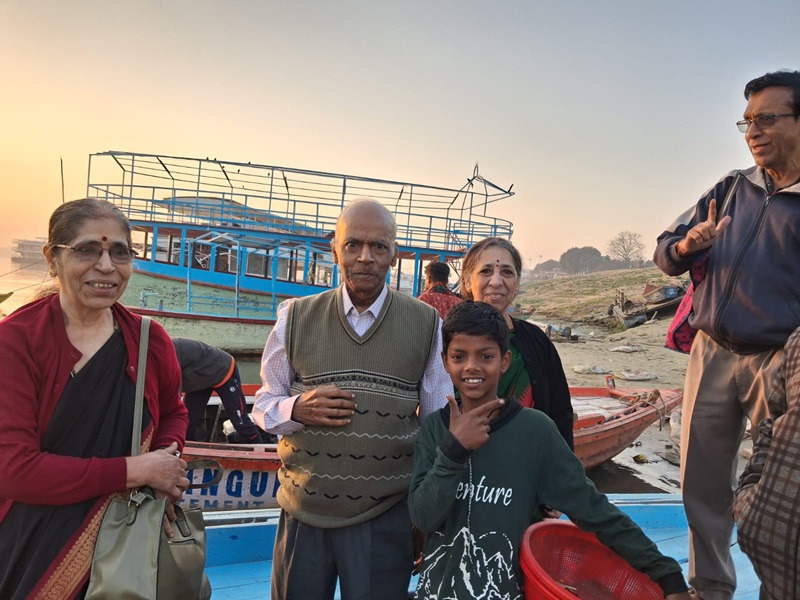 Pico Iyer, the eminent writer describes it as a city of joy. I tend to agree with this statement. In the short time that we spent in Varanasi, we came across many people - boatmen, pandas, flower-sellers, shop-keepers, tuk tuk and auto drivers, hotel staff and many others. I cannot recall a single sad face. They all were smiling and seemed happy.
The one image of Varanasi that stays with me is the boy who was selling flower & diya in Assi Ghat. He studies in 6th standard and is a seller in his free time. I tend to think of him as symbolising the spirit of Kashi.
Pico Iyer, the eminent writer describes it as a city of joy. I tend to agree with this statement. In the short time that we spent in Varanasi, we came across many people - boatmen, pandas, flower-sellers, shop-keepers, tuk tuk and auto drivers, hotel staff and many others. I cannot recall a single sad face. They all were smiling and seemed happy.
The one image of Varanasi that stays with me is the boy who was selling flower & diya in Assi Ghat. He studies in 6th standard and is a seller in his free time. I tend to think of him as symbolising the spirit of Kashi.
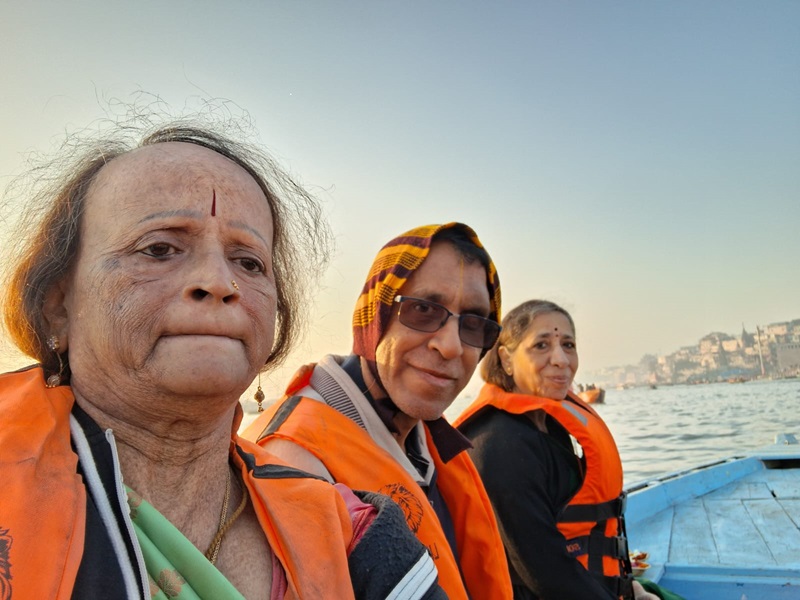
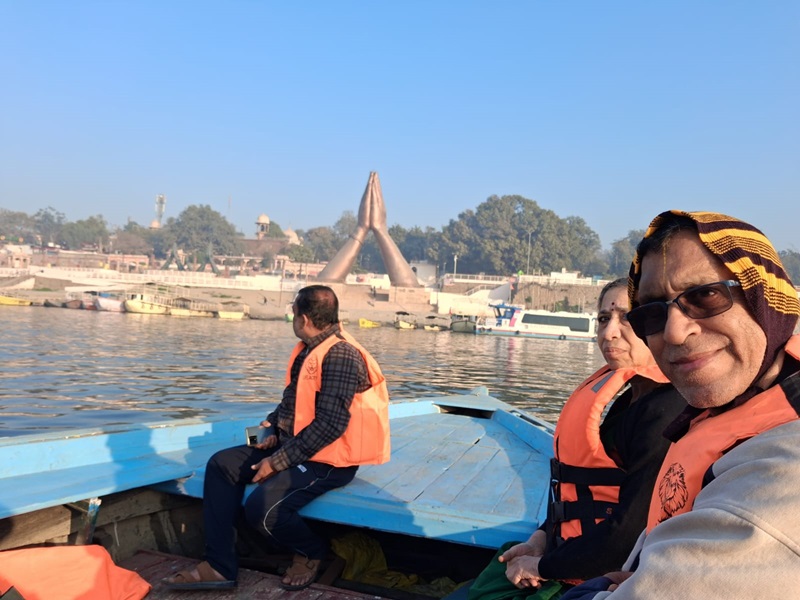 All of us were as eager and curious as little children while getting into the boat. it was going to be the first ride for all of us covering all the ghats of Varanasi. The ghats on the great Ganga riverfront at Varanasi are the city’s most iconic and celebrated image. For thousands of years these ghats have been the centre for religion, culture and commerce. The number varies as many ghats have been split up over the years. Wikipedia lists 89 ghats starting from Assi ghat in the south to the newly created Namo Ghat, which is the northernmost. We covered about 7.5 kms each way.
Ghats have been named after gods and goddesses (Tulsi, Janaki, Hanuman, Kedar, Ganesa, Durga etc.), kings, queens and warriors, (Ahilyabhai, Bajirao, Bhonsale etc.), states (Karnataka, Scindia, Vijayanagaram etc), religious places (Gaya) and so on. The only two ghats named after leaders are Rajendra Prasad Ghat and Namo Ghat. Pancha-tirtha yatra ghats (the five ghats which are for sacred bath) are Assi Ghat, Dasaswamedh Ghat (where we saw Ganga Aarti), Adi Keshava Ghat, Panch-Ganga Ghat and Manikarnika Ghat. The two ghats where cremations have been taking place every day for centuries are Manikarnika Ghat and Harish Chandra Ghat.
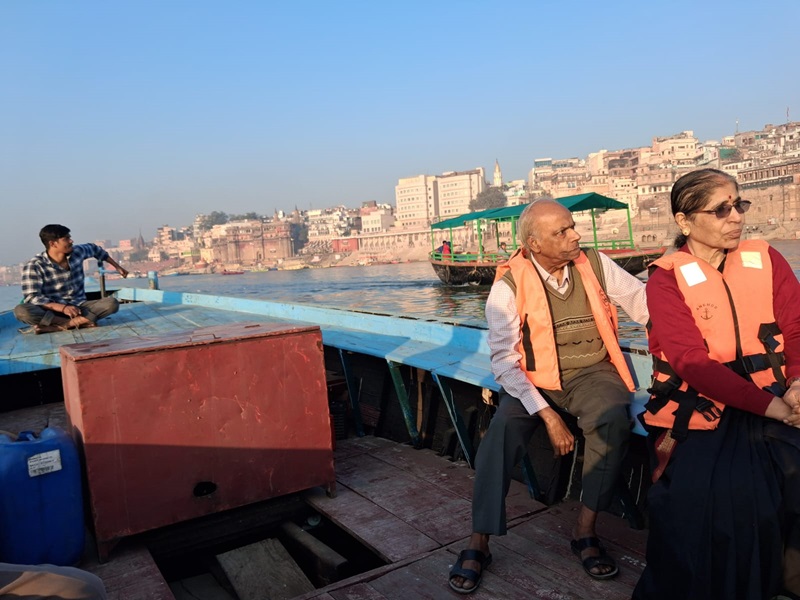
Breakfast was included in our lodging for the entire tour. We travelled only after eating breakfast in the hotel on all the days. The breakfast was standard in most of the hotels - poori, sabji, sandwiches, aloo paratha, poha and a sweet. Fortunately we were able to get Jain dishes in all the hotels. Since we had been warned that we may not find a decent restaurant on the Varanasi-Gaya route, we had good breakfast and left Varanasi at 10.15 AM on an estimated 5 hrs 30 min journey to Gaya.
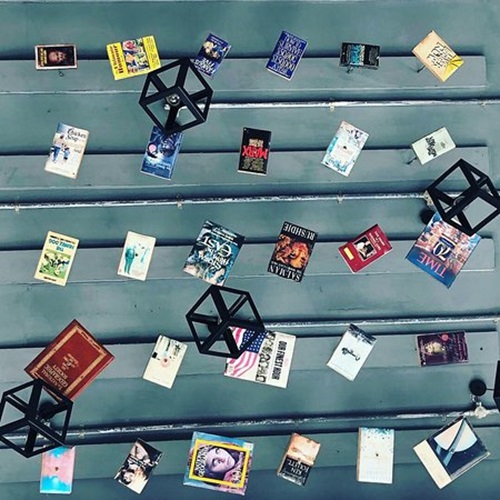
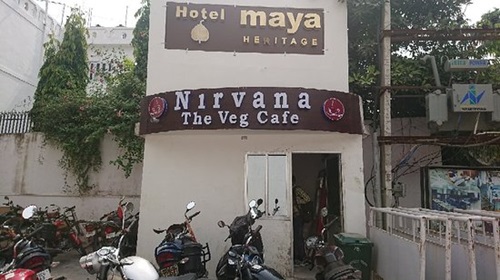
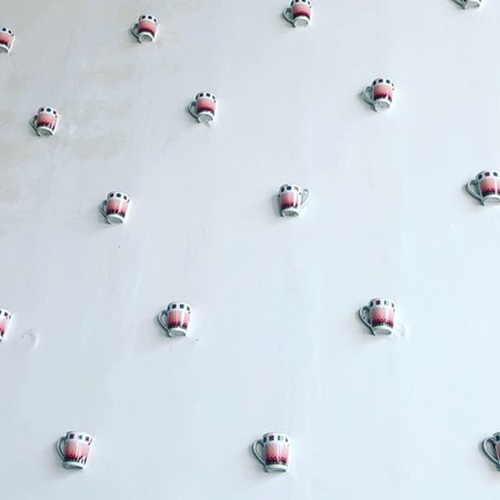 We wanted to order the lunch straightaway. The moment we said, 'Jain', we were directed to their vegetarian restaurant, Nirvana Cafe, just outside the hotel. It has an interesting interior. We met two other Tamil families there. We ordered our usual. chapathi/naan, 3 Jain Subjis (we wnted a change in the menu and added kofta), rice and curd. By the time we finished our lunch, it was about 4.45 PM. Our bodies longed for rest as we had got up at 4.30 AM for the dawn boat-ride. It was also a tiring drive from Varanasi. But we had no alternative but to leave for sightseeing. We asked Pankaj Pande to stay back as we could then travel in the tuk tuk in reasonable comfort, with me sitting next to the driver and others taking the back seats.
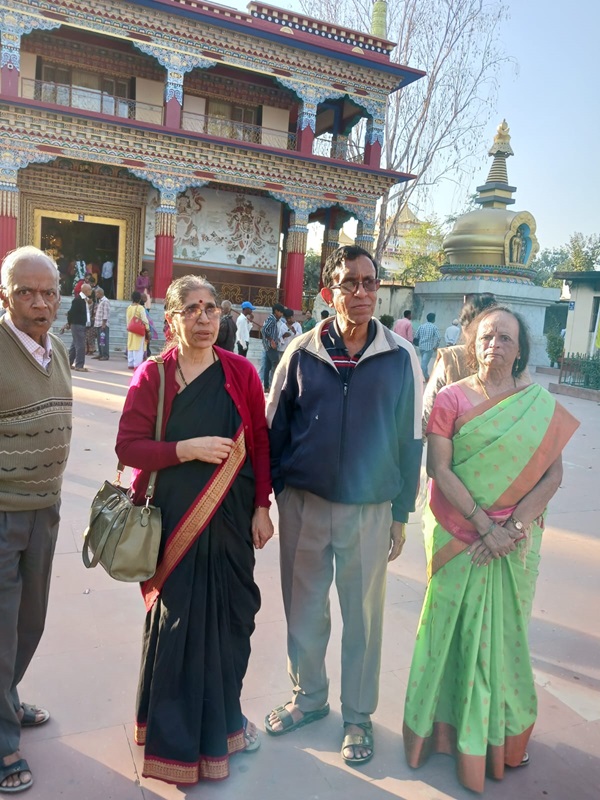 Bodh Gaya is celebrated as the birthplace of Buddhism and is to Buddhists all over the world what Varanasi is to Hindus or Mecca to Muslims. Every country in the world, which has a Buddhist population, including Japan, Burma, Bhutan, and Nepal, among others, has erected its version of a Buddhist temple with a monastery in Bodhgaya. And the diversity in architecture brought about by them is amazing.
 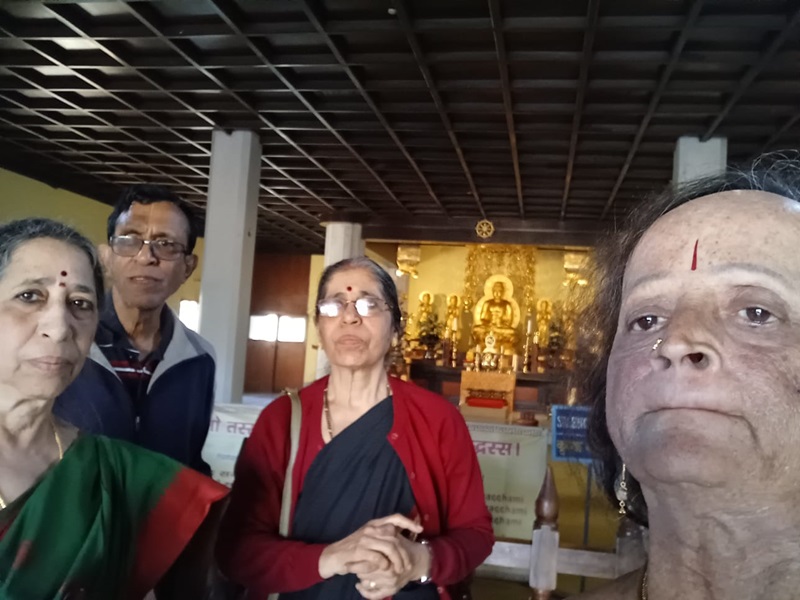 There are over 10 temples built by different countries. We had time only for 4 temples apart from visiting the 80-feet Buddha statue.
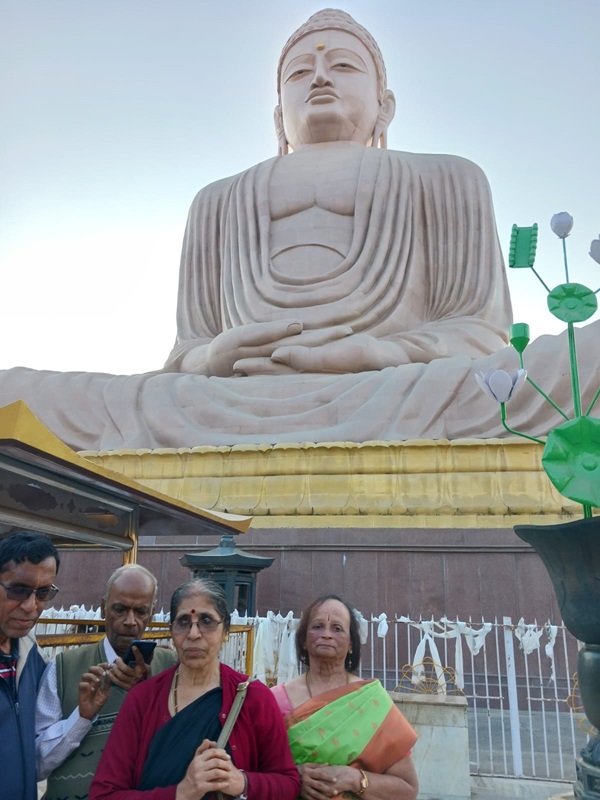 The centre of attraction in Bodh Gaya is the Mahabodhi Temple which was our last sight for the day. It was originally built by King Ashoka in the 3rd century B.C. The current temple was renovated sometime in the 5th or 6th century A.D. and is currently a UNESCO World Heritage Site. It has the Bodhi tree under which the Buddha achieved enlightenment. As we have to deposit our cameras in the locker room, the only photo is what we took outside the entrance.
 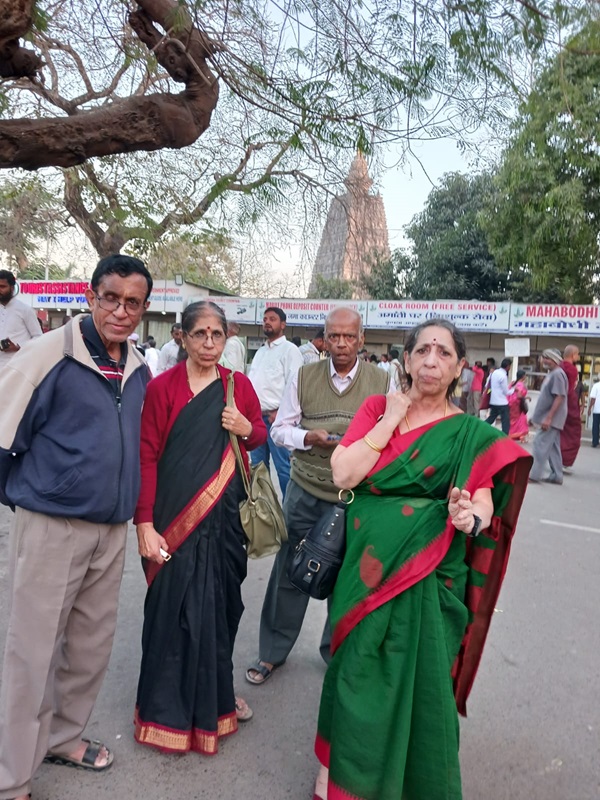 It is a huge and impressive complex, well-maintained with a lot of flowering plants and gardens. We sat under the Bodhi Tree for some time before coming out. The primary purpose of our tour was pilgrimage and Gaya shradham. Yet I felt that we should have spent a whole day at Bodh Gaya.
We bought bread and bun on the way back and came back at 8.30 PM after a very long day. We just ordered hot milk (quite costly at Rs. 125/ per glass). I had informed Mr. Abhiraj, the Purohit at Gaya about our arrival. He asked us to have bath (eat before that, if health requires it) and reach his ashram by 8.45 AM. A long and tiring but tremendously satisfying day ended.
Day - 3 (19th February 2026)
For long, I was using the term Shrardham. While writing this article, I learnt that Shradham (which comes from Shraddha) is correct. We learn new things throughout life. Maya Heritage Hotel, Bodhgaya was serving breakfast from 6.30 AM. The breakfast had more items than the other hotels. But as we were performing shradham, we had fruit juice and coffee and were ready to leave for Gaya (15 kms away) by 8.15 AM. We were headed for Ram Gopal Bhawan where Pandit Abhiraj would conduct the shradham. He is a 5th generation Gayawal Pandit. It is said that Gaya Shradham can be performed only by Gayawal priest and one cannot take the family priest.
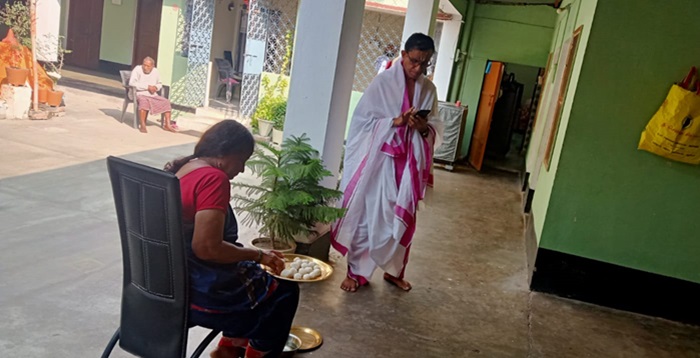
Pandit Abhiraj explained that the recital of Mantras and Homam would be performed in Ram Gopal Bhawan, but we would be going to three places for Pinda Dhanam. Pind literally means ball - a ball of rice and sesame seeds.
The broad procedure was
1. Preparation of Pind by the ladies (twice - one for deposit at Vishnu Pada and one for Akshaya Vata)
2. Going to Phalgu River (Phalgu is the correct name, not Phalguni) for Tarpanam and Pinda Dhanam,
3. Going to Vishnu Pada Temple for Pinda Dhanam
4. shradham with Homam including Mathru shodasi (without Homam for Hema)
5. Going to Akshya vatam for pinda dhanam
6. Brahman bhojanam
7. Brahman ashirvadam & Brahman dakshina, vastra danam
8. Bhojan for karthas (for the five of us)
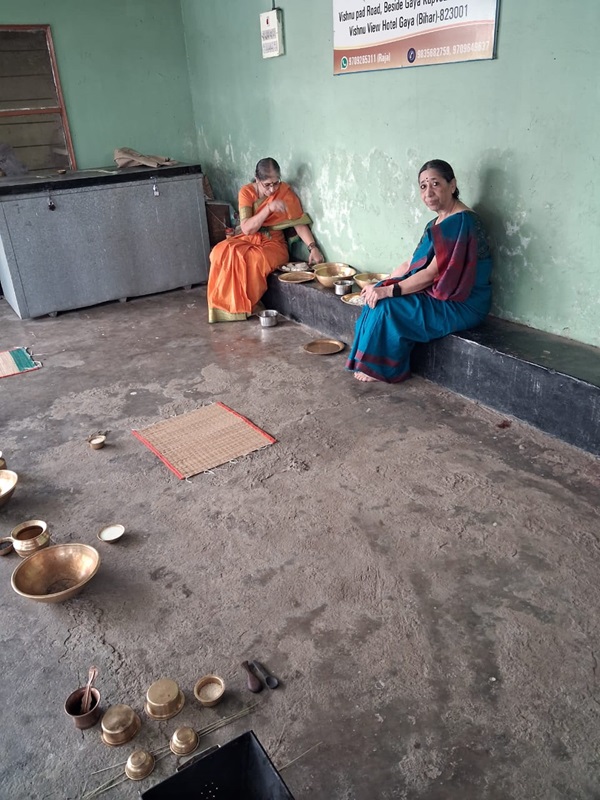
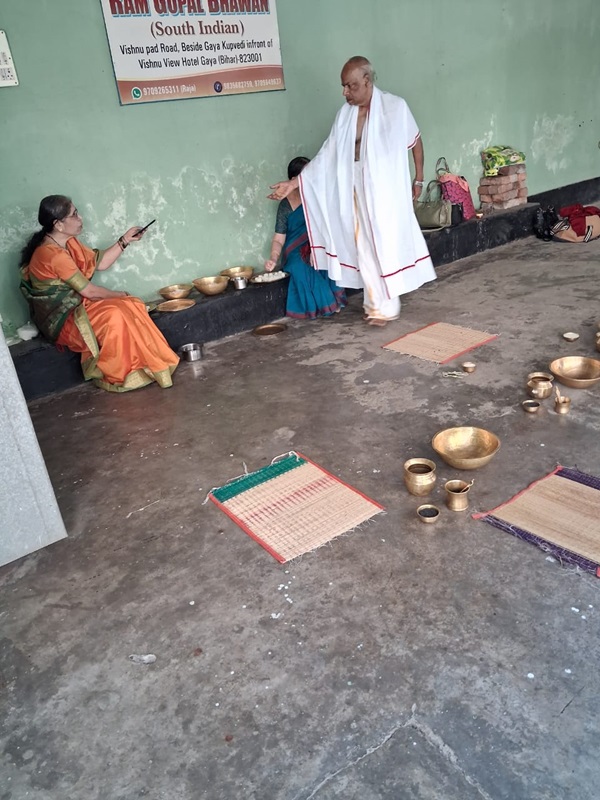 The whole procedure was expected to take about 4 hours, but took longer as the start was delayed. We took photos only when 64 pindams were rolled by hand by Amritha, Chandra and Hema. There were three mats - for me, Raghu and Hema. The mantras are vedic mantras including parts of Vishnu Sahasranamam (most of it is recited in annual shradham). After invoking mother and father, we chanted the mantras and offered libations of water and til seeds to the souls of mother, father, grand-parents and great-grandparents, both paternal and maternal. Next, came the part of the ritual where the “pinda pradaanam” is offered again first to mother, then father, then to grand-parents and great-grandparents, both paternal and maternal. Thereafter, the remaining “pindams” are offered as oblations to all other departed bandhus (relatives), mitras (friends) and sakhas (wellwishers). Amritha and I had a mental list of all those who have left this world - starting from my siblings, Amritha's siblings, my parent's siblings, Amritha's parents' siblingss and so on. We remembered our late teachers, friends and others. We also remembered Priya, Pepper, Sandy and Nicky (pet dogs of Gopalan/Vijaya, Santhanam/Kausalya, Usha/Murali and Ramesh/Sunandni).
In Gaya Shradham, the rituals recognise the role of the mother in a son’s life and the pain, suffering and sacrifices she underwent. Sixteen of the “pindams” were offered to mother to the chant of mantras. The verses chanted by the priest in this part of the ritual are extremely poignant and moves one to tears. These 16 verses are known as Mathru Shodashi recited by Adi Sankara during the funeral rites for his mother. I was able to get an excellent translation of these 16 mantras in Tamil by Mr. Mahesh in 'Mahaperiyava Blogs'. You can read மாத்ரு ஷோடஸி - a blog in Tamil on the mantras recited for mother in Gaya shradham by clicking here.
In Vishnupada Temple, we had darshan of Gadadhara (holder of the mace - a form of Vishnu) who is considered the principal guardian deity of Gaya and Sakshi Gopal. When we were having darshan of Lord Gadadhara, the Purohit told us to visit Kaal Bhairav in Kashi, who is the guardian deity there. The last item in the shradham rites is when the priest asks you to give up eating one fruit and one vegetable for the rest of your life. We had all decided earlier. Accordingly, Amritha and I gave up Bhindi and Sapota, Raghu and Chandra gave up Kothavarai (cluster beans) and Khirni (muskmelon) and gave up pudalai (snake gourd) and sapota.
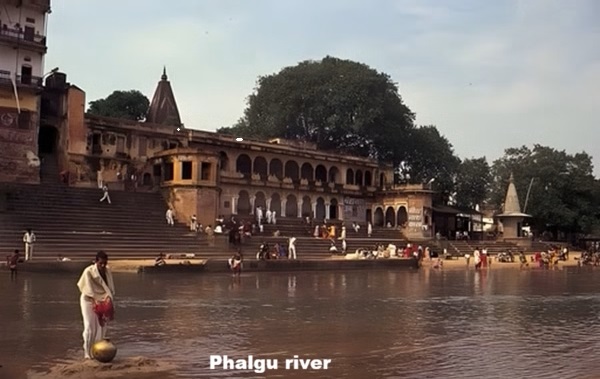
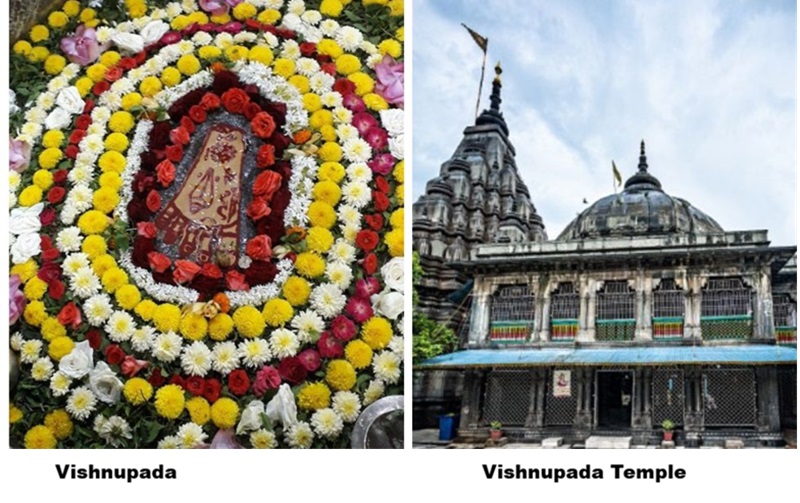
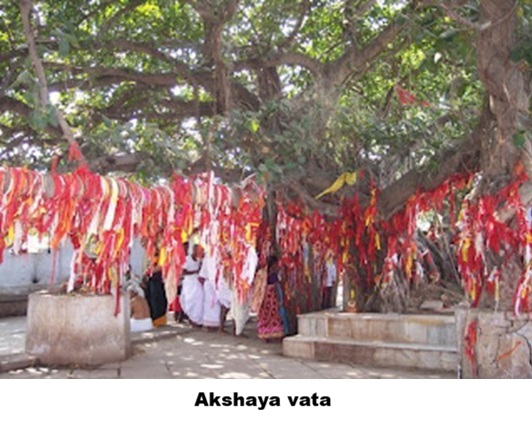
Chandra had brought Dhotis purchased in Kanchipuram for Vastra danam to the Brahmins. It was 3.15 PM when we were ready to leave. The return journey to Varanasi was largely uneventful except that we again saw IP Vijaya Mall. After tea on the way, we reached the same hotel in Varanasi where we had spent the previous night. We orderded chapathi, Jain subji and milk and went to bed by 9.30 PM.
Day - 4 (20th February 2026)
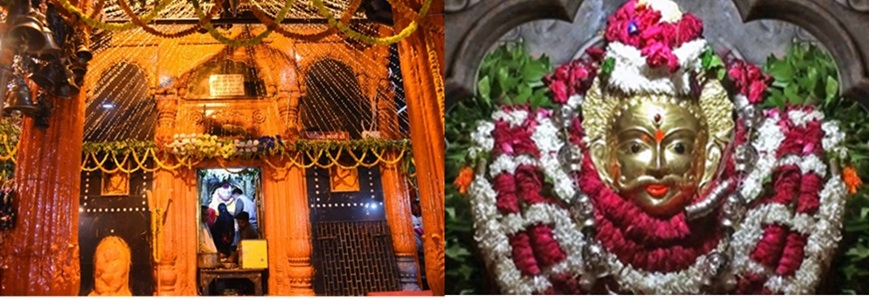 We left the hotel by 8 AM to visit Kaal Bhairav Temple. There was a long queue at the front gate and Pankaj took us to the back gate through narrow lanes. We had to wait for about 30 minutes for the darshan. Kaal Bhairav is a fierce manifestation of Lord Shiva. The name Kaal means time, and Bhairav means terrifying. Kaal Bhairav is revered as the Kotwal of Kashi (the Chief Guardian of Varanasi). It is believed that no one can stay in Kashi without the permission of Kaal Bhairav, and those who wish to reside here must first seek his blessings. Devotees believe that even Yamraj (the god of death) cannot enter the city without his approval. We bought some mementoes from one of the hundreds of shops in the area.
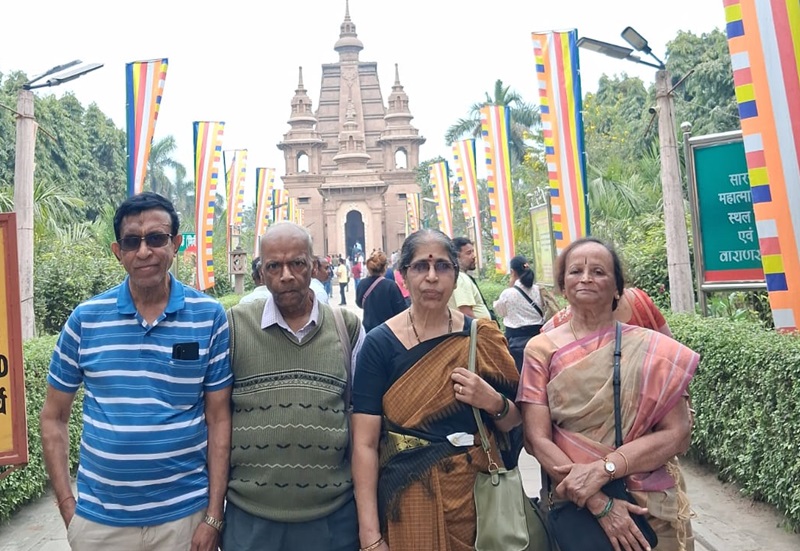 We then went back to the hotel for a late breakfast.
 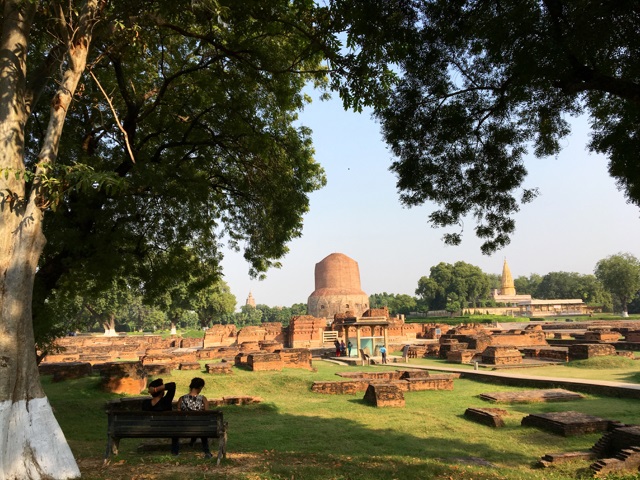 Our next stop was to Sarnath (10 km north of Varanasi), which is one of the four holy sites of Buddhism. The first is Lumbini, now in Nepal, where prince Siddhartha Gautama was born. The second is Bodh Gaya, in Bihar where he achieved enlightenment and became the Buddha. The third is in Sarnath, Uttar Pradesh, where Buddha gave his first sermon. The fourth is Kushinagar, also in Uttar Pradesh, where Buddha is said to have died/achieved Nirvana. Sarnath, like Bodhgaya has temples and monasteries built by different nations. The main attraction is the Dhamekh Stupa and the museum. But this is closed on Fridays. We visited one temple and saw the Stupa from the vehicle.
Our guide at Sarnath said that there is a weaver cooperative at Sarnath that sells saris directly to customers. Chandra and Amritha were tempted to visit the shop and ended up buying silk saris - our only major shopping in the tour.
After lunch en-route we reached Prayagraj (Allahabad) by 3 PM. Originally we had planned a dip in the Sangam in the evening and leave for Chitrakoot next day as early as possible. But Raghu and Hema were feeling slightly unwell - in fact we were all tired after the hectic 3 days. We decided to rest for the day.
We decided that we would eat the Teplas that we had brought with us for dinner. So I went out and bought 1 kg of good curd and bananas. When we decided to buy hot milk, Raghu and Chandra accompanied me. I was impressed by the shopkeeper selling curd and milk. He heated the milk in front of us, poured it in the flask and also sought our blessings. Five of us finished an excellent dinner in about 200 Rs/- (excluding the cost of Teplas)
Day - 5 (21st February 2026)
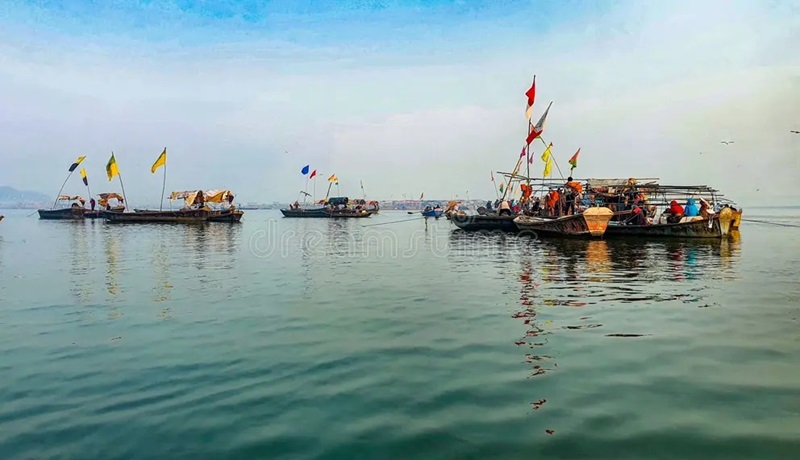
 Hindus believe that waters have the power to cleanse us spiritually. This belief is reinforced by a line in the Rig Veda (10.9.8) - 'Whatever sin is found in me, whatever wrong I may have done, if I have lied or falsely sworn, waters remove it far from me…’ That is why a pilgrimage went by the name of Tirtha Yathra (a travel to take holy baths in water bodies). Rivers, in particular, are regarded as holy and we have temples alongside all the rivers in India. Of all the rivers, the Ganga holds a special place. The Triveni Sangam is the meeting point of three holy rivers - Ganga – symbol of purity, Yamuna – symbol of devotion and Saraswati – symbol of knowledge. Keeping in mind our age, the only bath we had planned in the entire trip was a dip (3 to be precise) in Triveni Sangam at Prayagraj. Unfortunately, Raghu was quite unwell and could not accompany us.
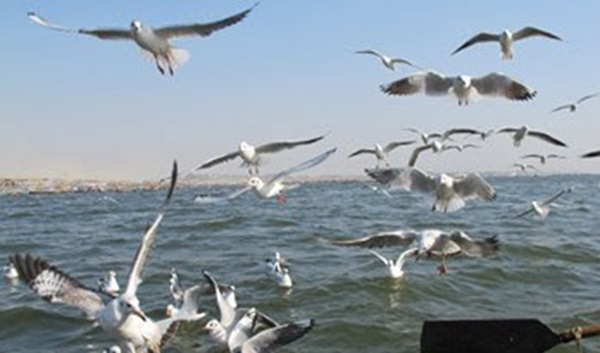
We left the hotel at 7.15 AM. Google Maps took us without any hitch to the Ghat where the boat owner arranged by Pankaj was waiting. 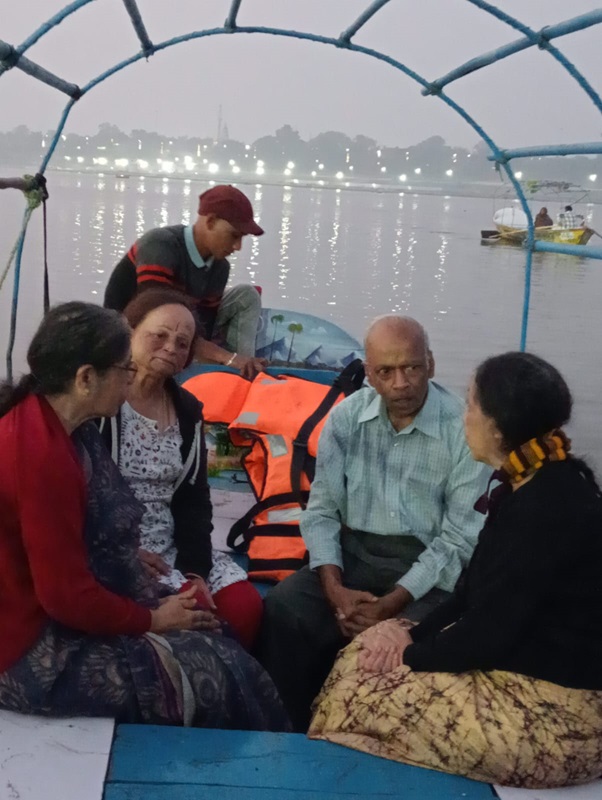 The boat ride to the confluence point was interesting with many birds flying overhead. We could clearly see the difference in colour between Ganga and Yamuna (which is darker). After reaching Sangam we hopped from our boat to another and then on to another. There was a priest helping us offer prayers to the rivers. It was then time for each of us to take our 3 dips. The immersion point is safe with only 4 feet depth. But as I put my foot down, I felt was going to drown. After a few agonising seconds, my feet touched the surface. I felt safe enough to take 6 dips. Chandra and Amritha followed. Hema was satisfied with sprinkling the water on her head.
 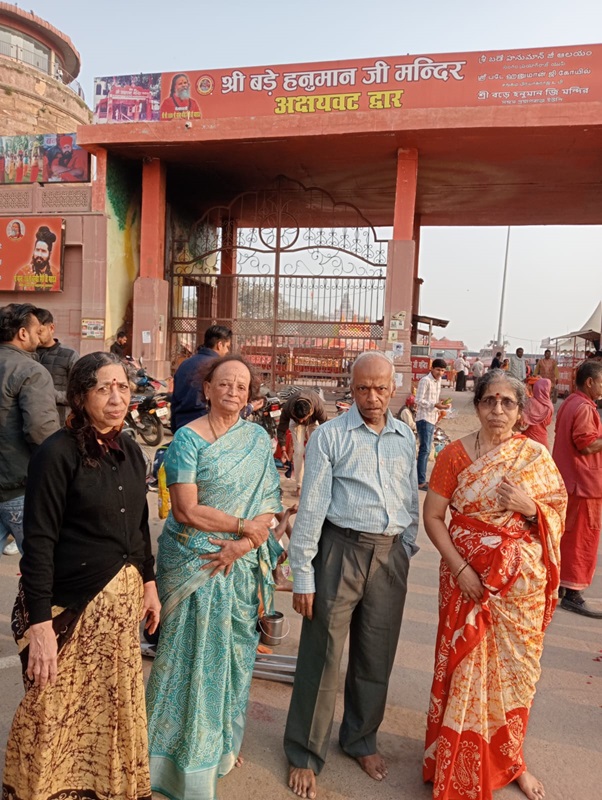 There was a make-shift arrangement in the boat for ladies to change dress. We hopped back to our boat and returned to the shore with more birds overflying us.
On the banks is the Sayana Hanuman (locally known as Bade Hanuman or Lete Hue Hanuman) temple. We had darshan there before returning to the hotel. We were worried when we saw Raghu looking sickly. We thought of administering IV drip to him to boost his energy level. Unfortunately no doctor was available though the hospital was next to our hotel. We came back for breakfast. Fortunately Raghu's appetite was normal and the breakfast made him stronger. We left Prayagraj for Chitrakoot at about 10.15 AM.
Chitrakoot
After a 2-hour journey, we checked into Hotel Parth in Chitrakoot. Pankaj told us that he would get a guide by 2.15 PM and that we must finish whatever sight-seeing can be done before sunset and then go to Ramghat for the Mandakini Aarthi. We ordered the usual lunch (chapathi, jain subji, jain dal, rice and curd) and were ready to leave by 2.30 PM. My search showed me that the Ramayana Tour organised by many organisations covers the following route.
Ayodhya -> Nandigram -> Shringverpur -> Chitrakoot -> Sitamarhi -> Buxar -> Darbhanga -> Mahendragiri -> Jagdalpur -> Nashik -> Nagpur -> Bhadrachalam -> Hampi -> Rameswaram -> Sri Lanka
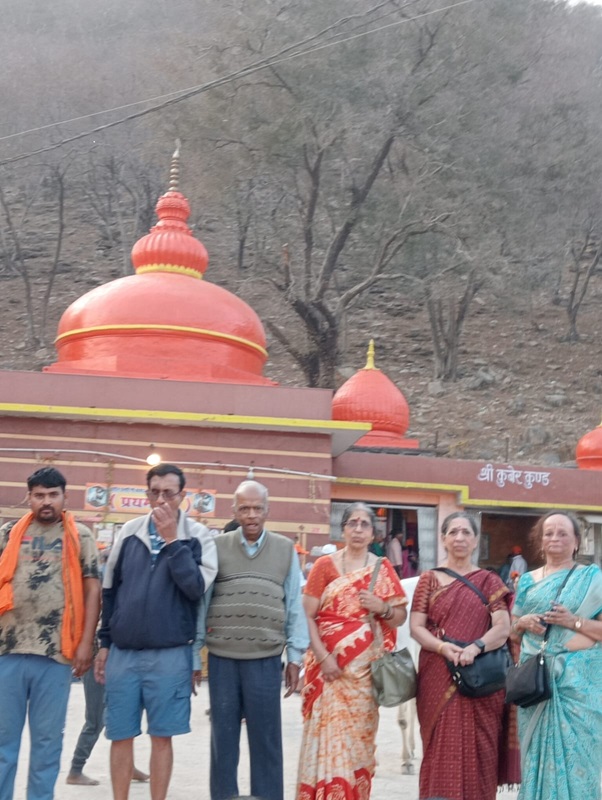 Chitrakoot means Hill of Many Wonders and is a very important town for pilgrims as it has quite a few places associated with the Ramayana. Legend goes that out of the 14 years in exile, Rama spent over 11 years in Chitrakoot. We covered only 4 places in the 4 hours we had. After sunset, we visited Ram Ghat for Aarthi and we visited Hanuman Dhara next day.
Our first stop was Kamtanath Temple is a temple devoted to Lord Rama located in the town itself.
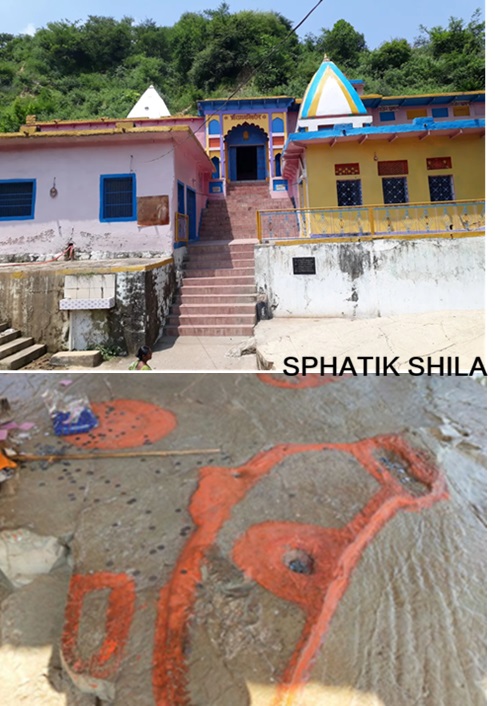 Next was Sphatik Shila (Crystal Rock) which is a huge rock resembling a reddish and white crystal on the bank of River Mandakini. There are foot prints of Rama and Seetha on this rock. Sphatik Shila is a sacred site located along the banks of the Mandakini River. This rock is known as the spot where Kakasura, a demon poked Sita and had the Brahmastra thrown ai him by Rama. Though the crow got a reprieve, he was blinded in one eye. This story explains why crows have one eye.
Gupt Godavari is a fascinating site located about 18 kilometres from Chitrakoot, steeped in both natural beauty and mythological significance. This spot is famous for its two cave system - one dry and one wet - hidden within a mountain. The caves contain beautiful carvings as well as two natural thrones (said to be dedicated to Rama and Lakshman). The wet cave has a stream of water known as Gupt Godavari.
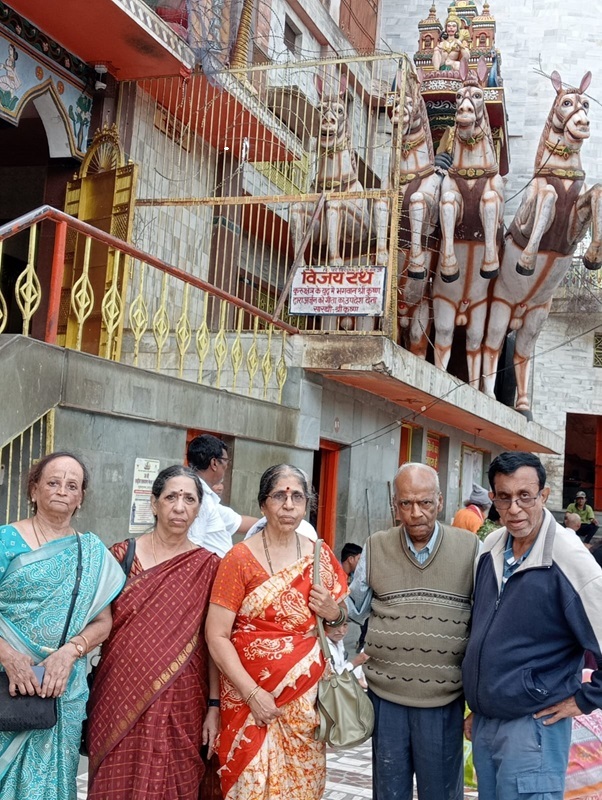 We passed by Sita Khund, the spot where sita was said to have washed her hair in Mandakini river. Mata Ansuuya Ashram is believed to be the resting place of the sage Atri and his devout wife, Sati Ansuiya, who are venerated for their piety and devotion. A permanent exhibition of mythological scenes has been put up. The story of Dattatreya, the story of Sita with Anusuya, the story of how Ganga appeared in front of Anusuya and various other events from the Ramayana are well displayed. But we had to rush as it was nearing sunset.
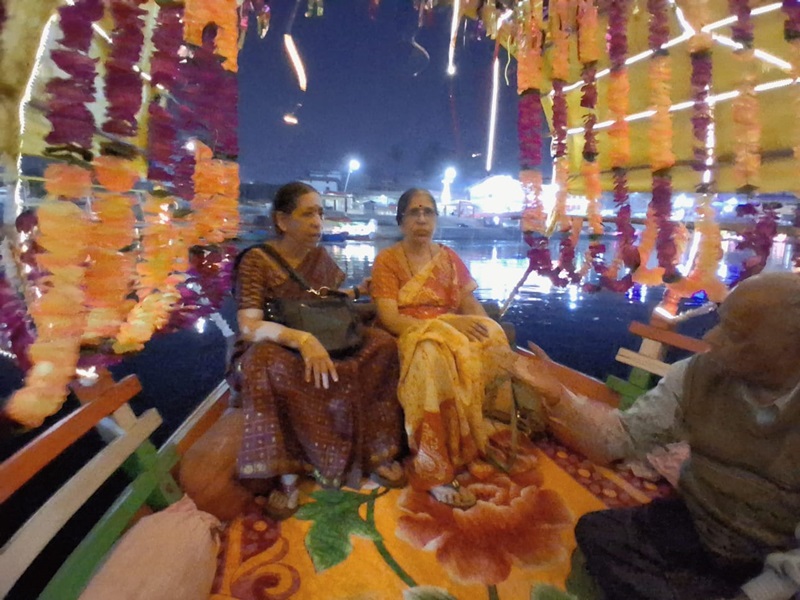 After tea in a decent dhaba, we went back to the hotel. Raghu who was quite sickly in the morning had visited all the places which involved a lot of walking. So he decided to rest for the day. We then went to Ram Ghat, where Aarti takes place every evening. Mandakini River (also known as Payaswini) has no connection to its namesake in Uttarakhand. It is a gentle river, though we heard that it can be furious after monsoon. All the boats, including the one we hired, are decorated (like Indian brides, our boatman tells us). The boat covers a few temples on the ghats (we were too tired to get down for darshan), a big Hanuman statue before coming back for the Aarti. We get back to the hotel after another satisfying day. Ganga Aarti in Varanasi is a grand affair while Mandakini Aarti is much simpler, which perhaps is its appeal.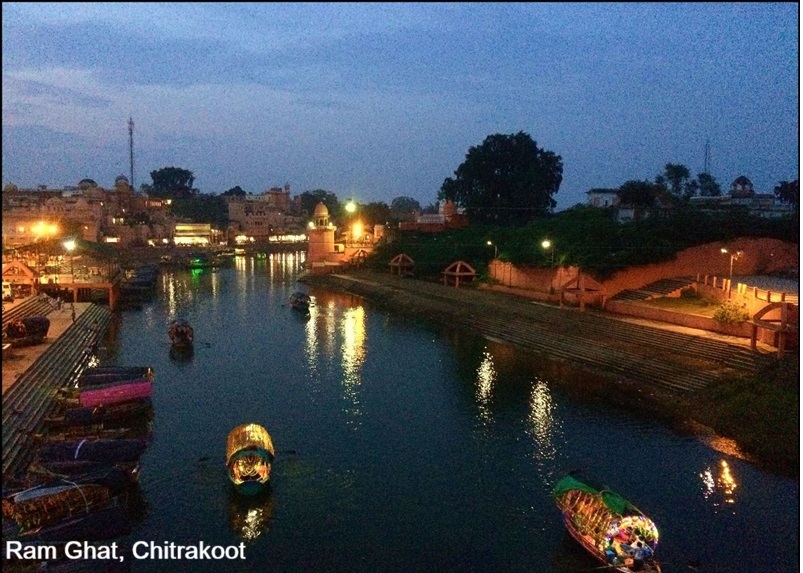
We orderded chapathi, Jain subji and milk and went to bed by 10.00 PM. The next day we would be travelling for about 7 hours, the longest road travel in the tour.
Day - 6 (22nd February 2026)
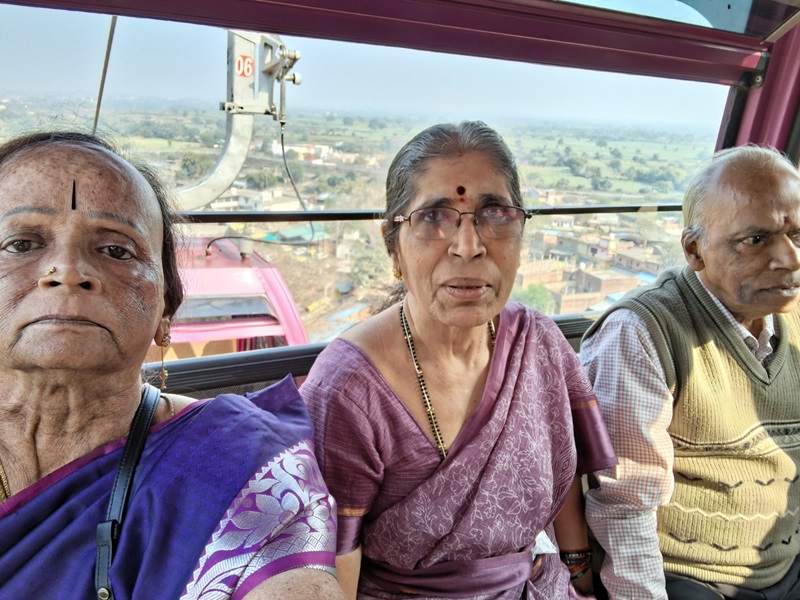
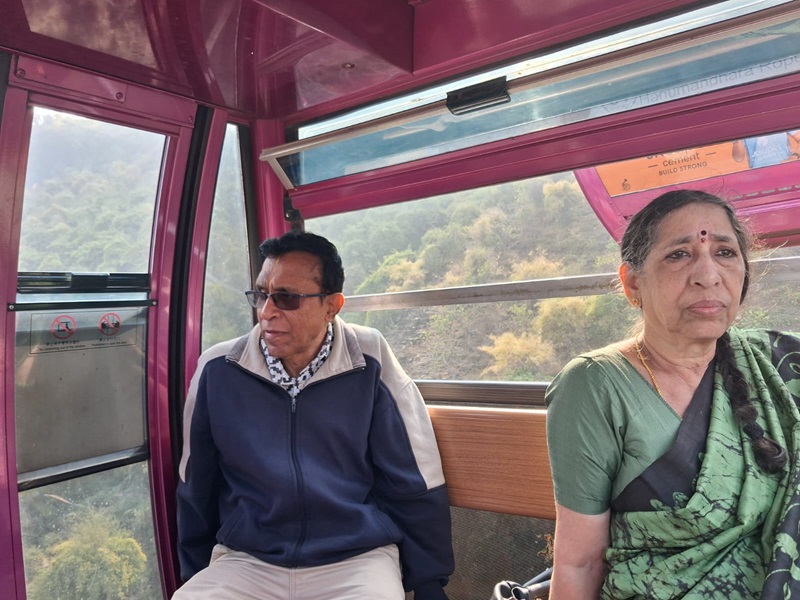 Hanuman Dhara (waterfalls) Mandir, perched atop a massive rock in Chitrakoot was our first stop after breakfast and checking out from the hotel. Most pilgrims are tempted by the ropeway. Only after getting out of the cable car, you realise that the ropeway covers only about 150 steps and there are 200 more to climb. Amritha and I were the only ones to venture up.
 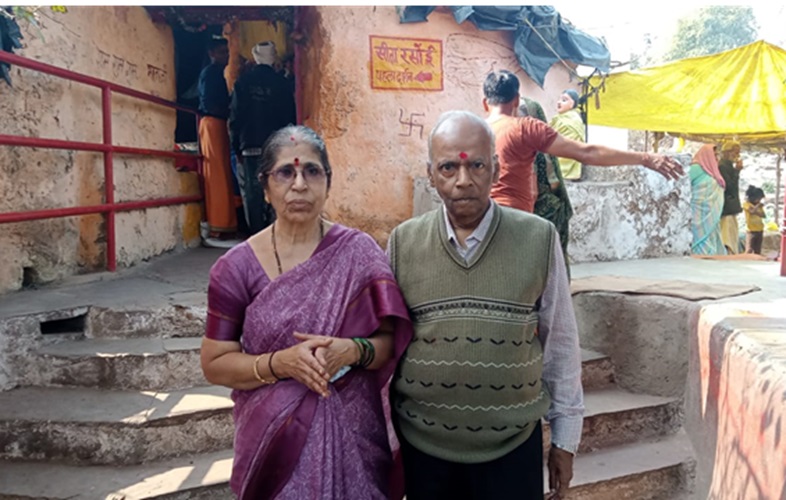 There is a natural rock formation image of Shri Hanuman inside the cave and a natural stream of water falling on the tail (giving the name Hanuman Dhara). It is believed that after the coronation of Lord Ram, Hanuman requested for a permanent place to settle in the Kingdom of Lord Ram, where his Injury of burns on his tails will be cured. Lord Ram, then with his arrow, spurred a stream of water on the tip of mountain and asked Hanuman to rest there with water of the stream falling on his tail to cool down. The view from the top was very good.
We then set out for Shringverpur which was about 150 kms away. After 30 minutes of drive, Pankaj stopped the vehicle and checked the tyre. It had a puncture. Fortunately we had stopped in front of a tea shop and could have tea as the tyre was changed. When one travels from Prayagraj, reaching Shringverpur is easier as you have to just move from one highway to another. But from Chitrakoot, it is not that easy. Google Maps guided us through interior roads covering many villages for over 20 kms. We were worried whether we were in the right direction and were relieved only when we hit the highway. 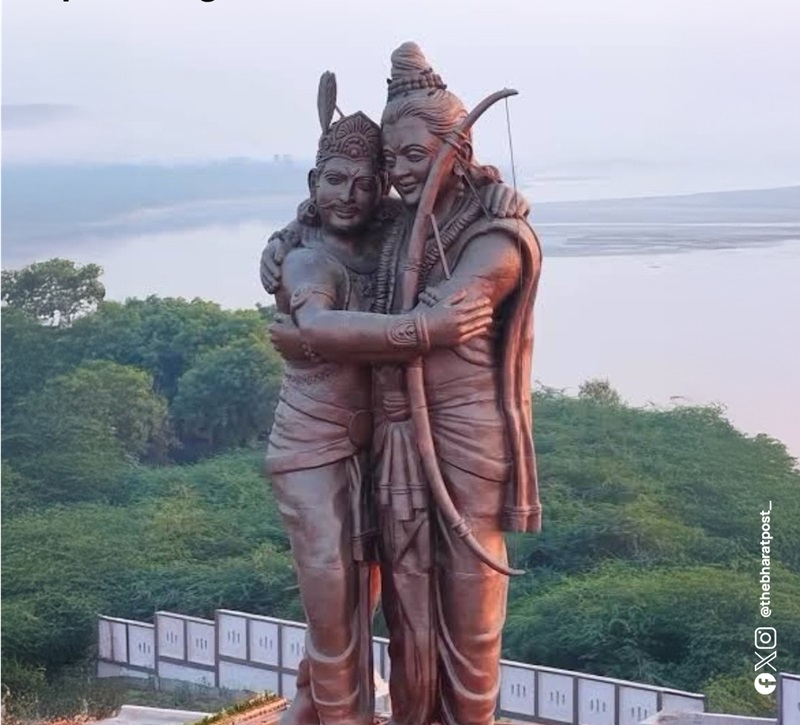 Shringverpur Dham is a site in the Ramayana circuit and is famous as the place where Guha, King of Nishada (hence known as Nishadraj) met Rama and ferried him across the Ganga. One of the most famous lines in Kamba Ramayanam in Tamil is
"குகனொடும் ஐவர் ஆனேம் முன்பு; பின், குன்று சூழ்வான்
மகனொடும், அறுவர் ஆனேம்; எம்முழை அன்பின் வந்த
அகன் அமர் காதல் ஐய! நின்னொடும் எழுவர் ஆனேம்... "
Note - ஆனேம் is not a typo. That is how it appears in Kamba Ramayanam.
(குகனோடு சேர்த்து 5 பேர் ஆனோம் , சுக்ரீவனோடு 6 பேர் ஆனோம் , வீடணனோடு (விபீஷணன்) 7 பேர் ஆனோம் ). (We four brothers became five with Guha, six with Sugreeva and seven with Vibhishana).
As part of the Maha Kumbh, U.P. Government has created Nishadraj Park here in 2024. I read that the statue of Rama accepting Guha as his brother is the centrepiece of the Park. Unfortunately, we did not have time to visit Nishadraj Park.
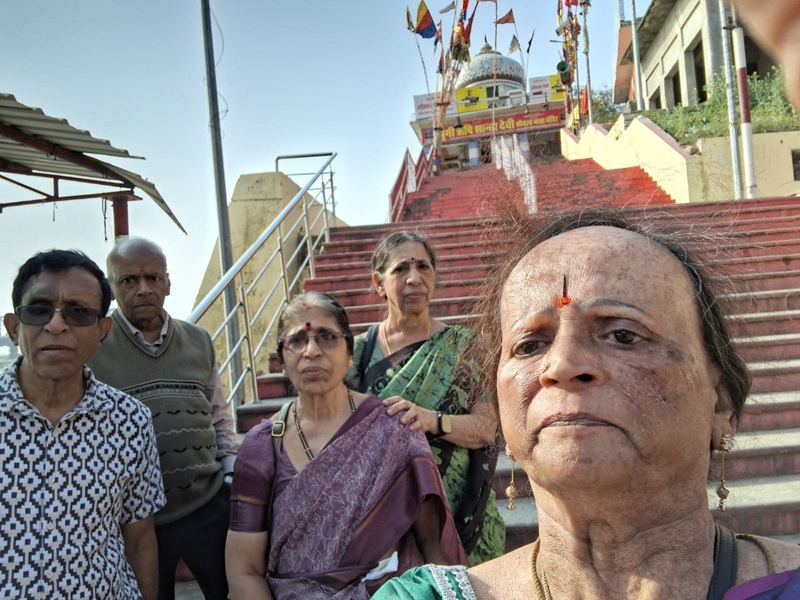
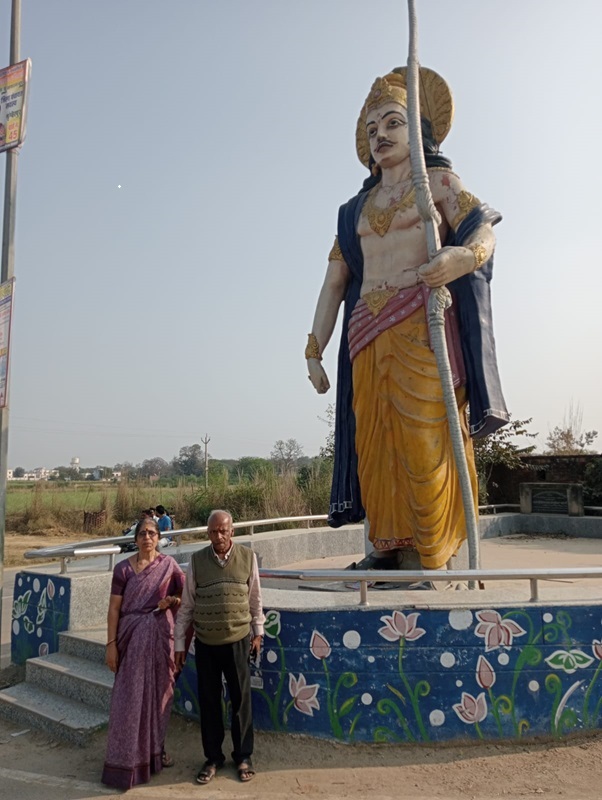 Shringverpur is the place where Rama got his fourth brother (five including Rama). There is a temple for Lord Rama which we visited. We did not venture near the river. Amritha and I took a photo in front of Guhan's statue. It was already 2.30 PM. Fortunately, we found a good restaurant within a short distance from Shringverpur and had our usual lunch with Tomato soup added for all except Hema.
Next stop was going to be our last in the tour - Ayodhya. We were expected to be in Ayodhya in time for the Sarayu Aarti. But the puncture and the detours meant that we could reach our hotel in Ayodhya only at 7.45 PM. We checked into Hotel Royal Palm Inn. In 2022, we stayed in Lucknow and visited Ayodhya as there were no decent hotels in Ayodhya. Ram Mandir has changed all that. Google tells me that there are now 73 star hotels (3, 4 & 5 *) with another 50 under construction. The boom has its downside. We faced a very slow service in the restaurant and the rooms which the manager put down to the non-availability of trained staff.
While nearing Ayodhya, we got the good news from Shuklaji that he had succeeded in getting the pass for VIP Darshan for us and Pankaj for 7 AM to 9 AM the next day. As soon as we checked in, I requsted the receptionist to print us a copy of our pass and copies of all our Aadhaar cards. She obliged.
We had our dinner in the restaurant. We had a leisurely dinner, not by choice, but since the service was very slow. Since we were told that even books would not be allowed in Ram Mandir, Amritha, Hema and Chandra decided to recite slokas on Lord Ram before going to bed. Raghu was in his room watching the T20 World Cup match (which India lost to S. Africa badly) and I was working on the laptop listening to the sweet voices of the three ladies. The long day that started with a visit to Hanuman Dhara in Chitrakoot ended with slokas on Ram in Ayodhya.
Day - 7 (23rd February 2026)
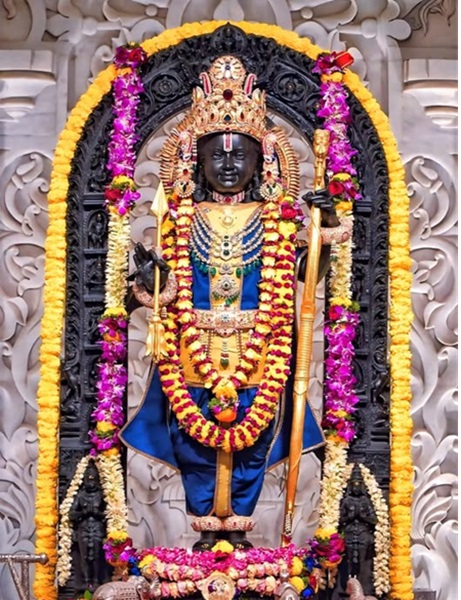
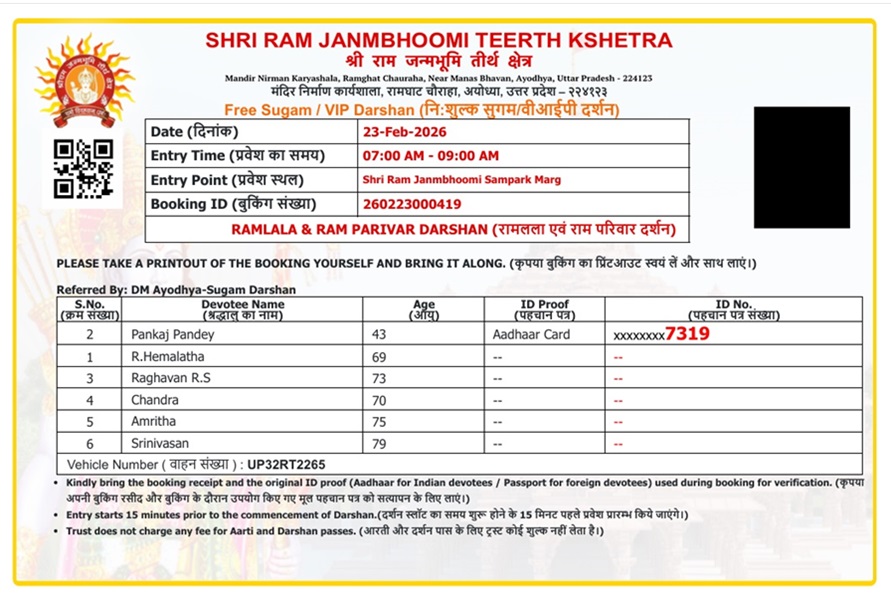 Pankaj said we should leave by 6.15 AM to reach the Ram Mandir Gate No. 2. After leaving us at the gate, Pankaj parked the vehicle and came back to esort us. We passed through many levels of security, deposited our belongings in the locker, left our footwear for safe keeping etc. and after a brief wait, stood in front of newly installed Ram Lalla as well as the old Ram Lalla. Since the crowd was not too much, we could have an unhurried darshan. Our pass enabled us to have darshan at Ram Darbar in the first floor which was consecrated in June 2025. This depicts the Pattabhishekam of Rama. This is not yet open to the general public.
  We were asked by some people about the VIP Pass. To get a free Sugam (VIP) Darshan Pass for the Ayodhya Ram Mandir for skipping the general queue, book online via the official Shri Ram Janmbhoomi Teerth Kshetra website - Click here. Register with your mobile number, you will get the OTP, then select the date/time slot (7 am-9 pm) (300 passes are issued for every 2-hour time slot), and download the pass. Get a copy of the pass and the ID-Proof document printed for showing to the security at the gates of the temple. For us, this was done by Shuklaji of Ma Bhawani Travels, but any devotee can do this, if your date of visit is decided.
Though we had an excellent darshan, I did not feel the vibes that I usually feel in Tirumala or Kanchipuram. Maybe necause it is a new temple without the aura that Balaji and Varadaraja have acquired over centuries. Pankaj said that a visit to Ram Mandir is not complete without a visit to Hanuman Garhi. It meant a 1 km walk and climbing about 80 steps. We had a good darshan of Hanuman. We noticed that there was a Vijaya Raghava temple at the spot where we had to wait for Pankaj to bring the vehicle. We had darshan at the temple and were happy to hear the singing of 'Pallandu'. We were happier when we got Puliyodharai prasadam.
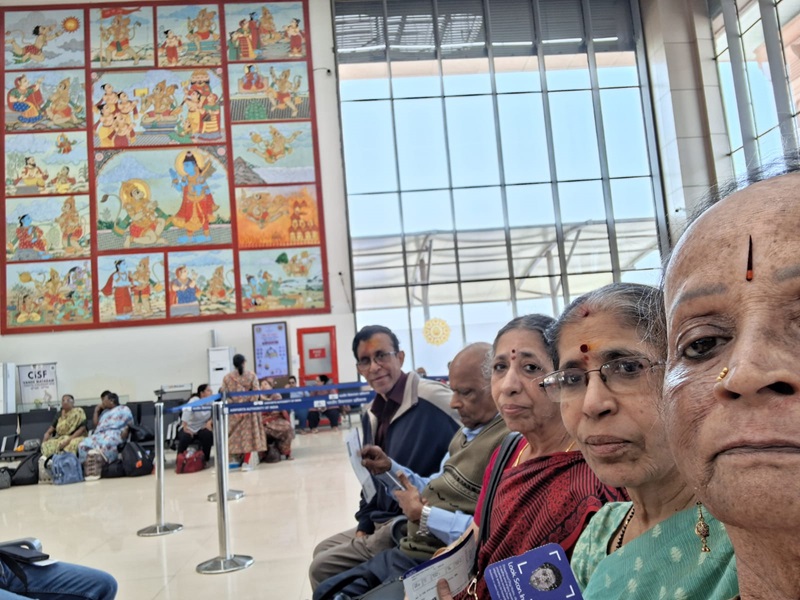 Back to the hotel for breakfast, another slow-service ritual. We took rest for about 2 hours and reached Ayodhya airport at 12.30 PM for our flight at 14.30 hours. We conveyed our heart-felt thanks to Pankaj for his excellent service for 7 days and took leave of him. Ayodhya airport was built only in 2023 and is a compact airport. The murals are interestting. Raghu and Hema wanted to have tea and paid Rs. 260/ for a cup. Our flight was slightly delayed but we were sure we would reach at scheduled time. This time, it was Jaim meal for all of us (a roll with a lot of moong, very filling). At Bangalore we took leave of Raghu and Chandra and walked more than a km to the Uber pick-up point.
The Uber driver who picked us up was a hard-core cricket lover. So we had excellent conversation throughout the drive. He predicted India-S. Africa final (which was what over 90% had predicted). He was proud about his young son who had been admitted to Delhi Public School in Udipi. We were happy to hear that he keeps back just 200 Rs.-/ day and sends the rest back to his wife. We blessed Farhan and wished him, wife and son well.
பார்த்தசாரதியின் புதிர்கள் (Parthasarathy's Puzzles)
From 11th May 2020, I have been publishing a set of cryptic clues in Tamil every day in my website as well as in the WhaysApp Group. There are about 35 dedicated solvers all over the world. I try to publish it wherever I may be. I was happy that I was able to publish it on all the days of the trip. In every hotel, my first query to the receptionist after collecting the keys was 'WiFi password please?' If any reader who knows Tamil is interested, click on the link.
I have summarised our travels along with the contact details of the Tour Agency and the Agency that organised Gaya Shradham for us. You can read it by clicking here.
Whenever some event starts with a problem but goes on well, I'd tell Amritha ' All's well that ends well.' Our 7-day trip began well, ran well (mostly - Just on one day, we had worries about Raghu's health.) and ended well.
Har Har Mahadev and Jai Shri Ram.
S.Parthasarathy
(with inputs from Amritha)
March 2026
BACK to the Main Page