|
My Experience with Three Governors – Part II
by
R.Santhanam 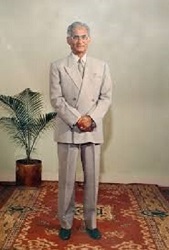 
This is Part - II of Santhanam's article. After reading this, you can read Part - III which is also published in this issue. The first part appeared in the last issue (No. 66 - October 2021). You can read it by clicking here. - Parthasarathy
Padinjarethalakal Cherian Alexander was India’s High Commissioner in the U.K.when he was appointed as Governor of Tamil Nadu. He landed in Chennai on 17th January 1988 and was sworn in the same day. He had called me from London three days earlier and told me about his programme. Apart from discussing the arrangements to be made for the swearing-in, he also told me that he wanted to host a High Tea on 18th evening and wanted the important persons in the city to be invited. He had started his career as Sub-Collector, Tuticorin, in 1950-51 before he went to the Kerala cadre at the time of reorganisation of States. He knew a number of senior officers and gave detailed instructions about who he would like to meet at the party. K. Venkataramanan, a State Civil Service officer, who was promoted to the IAS later, was Comptroller of Raj Bhavan household and my Deputy Secretary. Both he and I got busy drawing up the list of invitees and the menu, and got Alexander’s approval. There were nearly 250 guests including ministers, judges, senior officials and the elite of the city drawn from the fields of industry and culture. The tea party was a big success and Alexander complimented me and Venkataramanan generously for the strenuous efforts we had put in within three days.
I had a meeting with the Governor-designate as soon as he arrived at the Raj Bhavan. He was a tall man who looked very distinguished and dapper in his suit. His visage was generally serious but he was charming when he smiled. By a strange coincidence, he was a batchmate of his predecessor, S.L. Khurana, and my father-in-law, G.S. Srinivasan. He looked excited when I told him about my father-in-law and was upset that my father-in-law had passed away in January 1986. He fondly recollected his association with him, his varied interests, especially his love for books, and enquired about his family. He also enquired about my family. I noticed that he paid full attention to whatever I said.
It is well known that the Governor discharges the functions of the Chief Minister also during President’s Rule. S.S. Sidhu, G.V. Ramakrishna and A. Padmanabhan, retired officers who distinguished themselves during their service, were appointed as Advisers to the Governor. They were equivalent to Ministers and were allotted portfolios by the Governor. The Governor himself retained a number of departments with him, just as Chief Ministers do. These four persons together did the job of the entire cabinet comprising 25-30 ministers. The Governor used to go to the Secretariat every day, conduct meetings with Secretaries and Heads of Departments and give clear directions. I was present at all these meetings and took notes to follow up with the Secretaries on whether action had been taken on the directions given and decisions made.
In the last two or three years of MGR’s rule, the administration was badly affected because of the CM’s inability to speak. Files accumulated in the CM’s office for months and in a few cases, for years. The main task of the Governor’s administration was to clear the backlog. The Governor and his advisers worked overtime to take decisions on long-pending cases. G.V. Ramakrishna, one of the most brilliant and competent officers I have come across, mentioned jocularly once: “TN is the only State which has defied Newton’s law. What were sent up (meaning files) didn’t come down”. The administration had clear priorities: maintaining law and order and weeding out corruption. The Governor took a number of steps that were welcomed by the people. The Congress Party, which had been out of power since 1967 in Tamil Nadu, entertained fond hopes of making a comeback, taking advantage of the good work done during President’s Rule. Prime Minister Rajiv Gandhi visited the State every alternate month between February 1988 and January 1989. Congress leaders Moopanar, P. Chidambaram, Jayanthi Natarajan, Vazhappadi Ramamurthy and Vyjayanthimala (M.P) were all in attendance whenever he came. Even otherwise they were frequent visitors to the Raj Bhavan, giving the Governor feedback on how people perceived the administration. Sometimes, because of their insistence, the administration was forced to go back on certain good decisions. One such decision was that all cyclists should have lights fixed on their vehicles and should not travel without light at night. This is what common sense demanded but the Congress leaders told the Governor that the poor people were affected and if the rule was enforced strictly, the party would become unpopular. They made such a big issue of it as if the party’s chances in the elections depended mainly on reversing the decision!
******
When I joined as Secretary to Governor in December 1987, Kausalya was in the family way. The baby was due in the last week of April. I was hoping that the light work as Secretary to the Governor would enable me to spend more time with my family. MGR’s death and the subsequent developments put paid to all my hopes. Once President’s Rule was imposed, the workload increased significantly. My mother-in-law was seriously ill. She was staying with us while being treated at Cancer Institute. I had to take her to the hospital quite often. It was a very difficult period for all of us. Kausalya was naturally very unhappy that I hardly spent any time with her when she needed my company the most. Both of us called on the Governor and his wife, Ackama, a gracious and affectionate lady. They were aware of Kausalya’s condition and were very sympathetic. But Alexander was clear that there was no question of my taking long leave. He told me to get some help to look after Kausalya. Fortutiously, Varalakshmi came home one day to meet us and offered to look after Kausalya. She was of great help at that time. Radhika was born on 24th April bringing a lot of joy and cheer in our lives. Ackama Alexander used to enquire regularly about Kausalya’s health. She even presented our baby with a small gold ring. Varalakshmi, who had initially come to assist Kausalya, stayed on full time as Radhika’s ayah and later became our cook. She “retired” just two years ago after being with us for 30 long years.
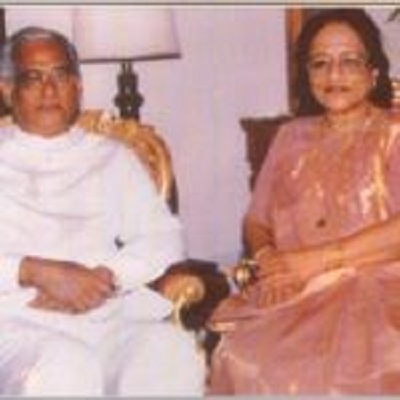 Alexander and Ackama were an ideal couple. They complemented each other and got along very well. They were excellent hosts and put their guests totally at ease. Alexander would make it a point to talk to each and every guest, whatever their status or age. He was also very diplomatic and never uttered a wrong word to anybody - not surprising for someone who had just had a stint in diplomacy. Even at Independence and Republic Day receptions, which a large number of people would attend, he would go around and meet as many people as possible. He was a well-read man with a particular interest in history. He was also a very good orator and preferred to speak ex tempore at public meetings. Unlike Khurana, who wanted lengthy drafts of his speeches, Alexander only wanted some material that was relevant to the subject to be given to him. He would generally pick up three or four points and elaborate on them. Needless to say, I found that a great blessing. Alexander and Ackama were an ideal couple. They complemented each other and got along very well. They were excellent hosts and put their guests totally at ease. Alexander would make it a point to talk to each and every guest, whatever their status or age. He was also very diplomatic and never uttered a wrong word to anybody - not surprising for someone who had just had a stint in diplomacy. Even at Independence and Republic Day receptions, which a large number of people would attend, he would go around and meet as many people as possible. He was a well-read man with a particular interest in history. He was also a very good orator and preferred to speak ex tempore at public meetings. Unlike Khurana, who wanted lengthy drafts of his speeches, Alexander only wanted some material that was relevant to the subject to be given to him. He would generally pick up three or four points and elaborate on them. Needless to say, I found that a great blessing.
******
Two or three months after taking charge, Alexander started touring the districts. He met with local leaders at the district level, with Collectors and other district officials, and participated in functions like the inauguration of completed projects. I accompanied him on all these visits. At the functions, the organisers used to ask college professors to translate the Governor’s speech. On our return to Raj Bhavan after a couple of visits, Alexander, who could follow Tamil well, told me that he was not happy with the translation. I gave him my views on what mistakes the translators were committing. The day before we left for our next tour, he said, “Why don’t you translate my speeches?” I was taken aback and told him that I had never done it and I wouldn’t like to embarrass him with my mistakes. He said, “You try. In any case it will be better than the translations we have had so far”. I was initially nervous but after a couple of sentences, I gained confidence. I didn’t find it difficult because I had listened to hundreds of speeches by Ministers and public representatives over the years and I had myself made many speeches as Collector and as Registrar of Cooperative Societies. The advantage that I had was that I was familiar with whatever the Governor spoke. On our return, Alexander complimented me on my translation and told the Chief Secretary and Advisers in my presence that I did a very good job.
A funny incident happened during our tour of Thanjavur district a month later. At one of the public meetings, the Governor said, “I’m very keen that everyone here should follow what I am saying. That’s why I’ve asked my Secretary Santhanam, who has served as Collector, to translate my speeches. I’m happy to say that he’s doing a wonderful job". He added a few more sentences before he let me do the translation. I was in a fix. I left out the sentence that is shown in italics here and went on to the next sentence. Alexander interrupted me here and said “சரியா சொல்லு ,முழுசா சொல்லு (Tell correctly, fully) The audience burst out laughing. I’m narrating this incident to show Alexander’s sense of humour and how generous he was in his praise.
One of the important developments during President’s Rule was the serious effort made to solve the Vanniyars’ demand for 20 per cent reservation for the community in education and employment in the State. Their violent agitation in September 1987 -- cutting lakhs of trees, blocking highways, blowing up culverts and attacking Dalit settlements -- shocked the conscience of the State. MGR, who was seriously ill in the U.S., was in no position to solve the issue. He died three months later. The Vanniyar Sangham led by Dr. S. Ramadoss threatened to continue the agitation during President’s Rule knowing fully well that a major decision on reservation could not be taken during President’s Rule. P.V. Narasimha Rao, who was Union Home Minister, visited the State a number of times and along with Adviser G.V. Ramakrishna held marathon meetings with the Vanniyar leaders. It was during this time that the concept of reservation for Most Backward Classes including the Vanniyars got crystallised. If the DMK Government that came to power in 1989 was able to announce 20 per cent reservation for MBCs soon after, it was because of the groundwork done by P.V. Narasimha Rao and G.V. Ramakrishna. Though Alexander was not part of the negotiations, his inputs given through GVR were very valuable.
Click here for Part - III of this article
R. Santhanam
February 2022
BACK to the Main Page
|